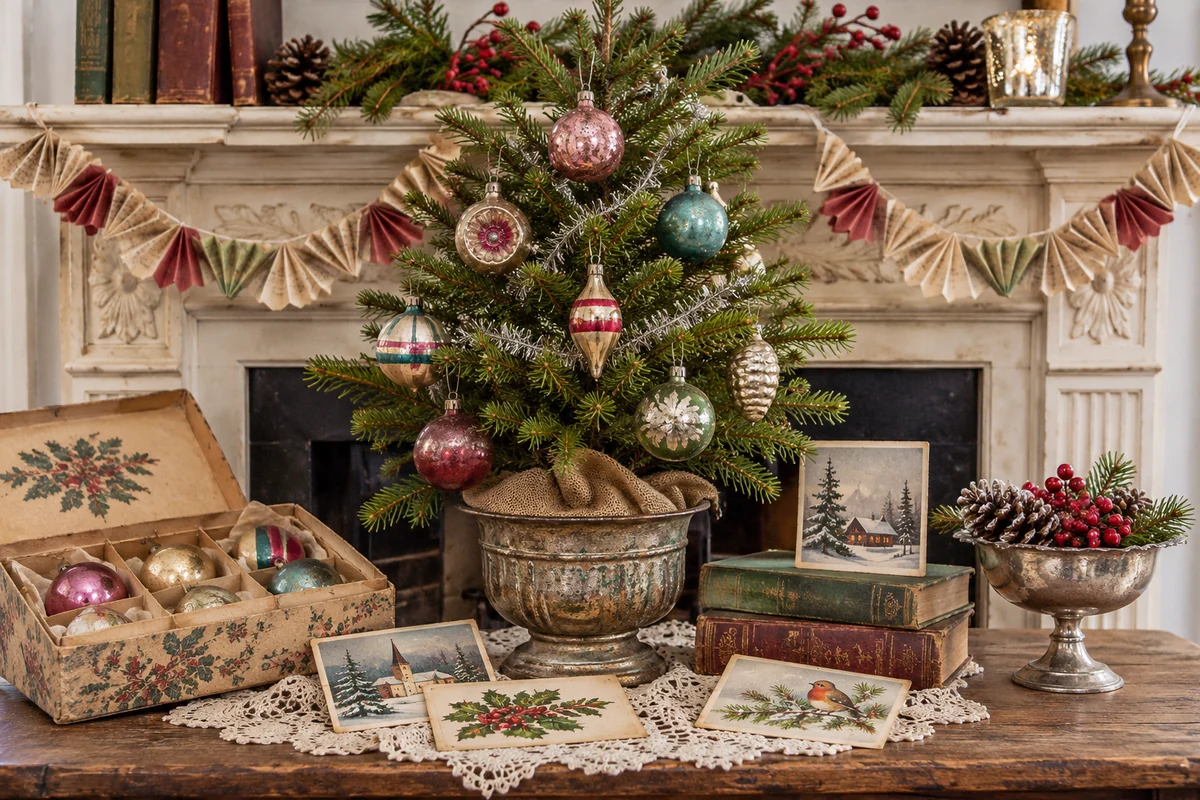
Vintage Christmas Decor Ideas With Nostalgic Charm
These seven vintage Christmas decor ideas start with things you might already own or find secondhand. Try aged glass ornaments, old holiday postcards, or a cranberry quilt. I’ll also show ways to display miniature Putz houses, brass bells, mismatched ironstone, and wooden thread spools.
Use one piece to set the colors before looking for anything else. A faded silver ornament or a soft red textile can be enough to tie an arrangement together. Look for a shelf, branch, or tabletop where people can see the detail without needing to move other things out of the way.
1. Let Aged Glass Ornaments Set The Palette
A few old glass ornaments can give a tree its character. Choose one finish to repeat, such as worn silver or soft red, and let a distinctive shape sit where you can see it from across the room.
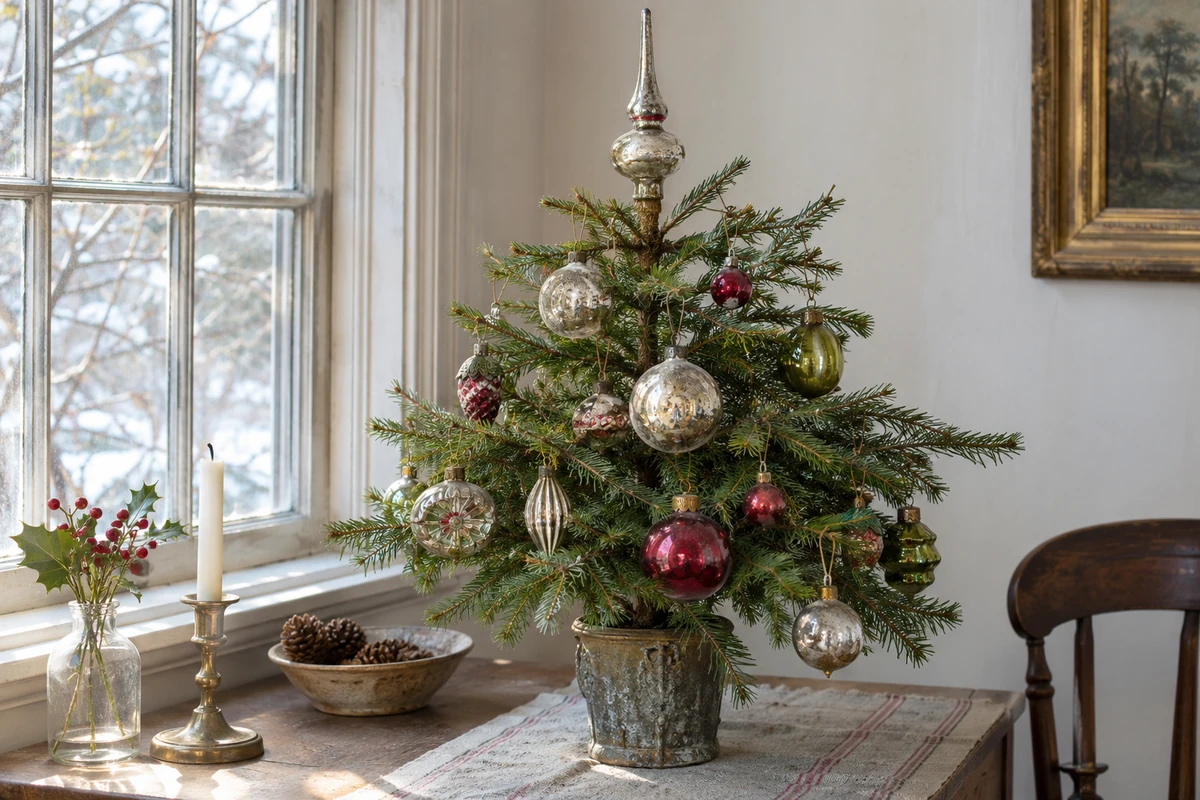
Look at the ornaments under the same light before deciding which ones work together. Soft green next to tarnished silver has a quieter effect than bright red next to reflective gold.
A collection with both can still feel cohesive if you give each cluster a little breathing room and repeat one tone farther up the tree.
How To Build The Display
- Lay your ornaments on a folded towel so you can see the colors and condition together.
- Pick two finishes to repeat, such as matte green and aged silver.
- Set aside pieces with loose caps, cracks, or uncertain hangers before decorating.
- Hang the sound pieces one at a time on branches that support them comfortably.
- Fill any gaps with simple new ornaments or paper pieces in similar tones.
A tabletop tree suits a collection with only a handful of pieces. If your favorite ornament is delicate, use a stable display where it can sit without hanging. Give older glass its own padded storage so other decorations don’t rub against it.
2. Make A Small Gallery Of Old Holiday Postcards
Vintage holiday postcards bring illustrated detail to a Christmas display without taking up much shelf depth. Stand a few up in separate holders and choose cards with one repeated color to make the grouping easy to read.
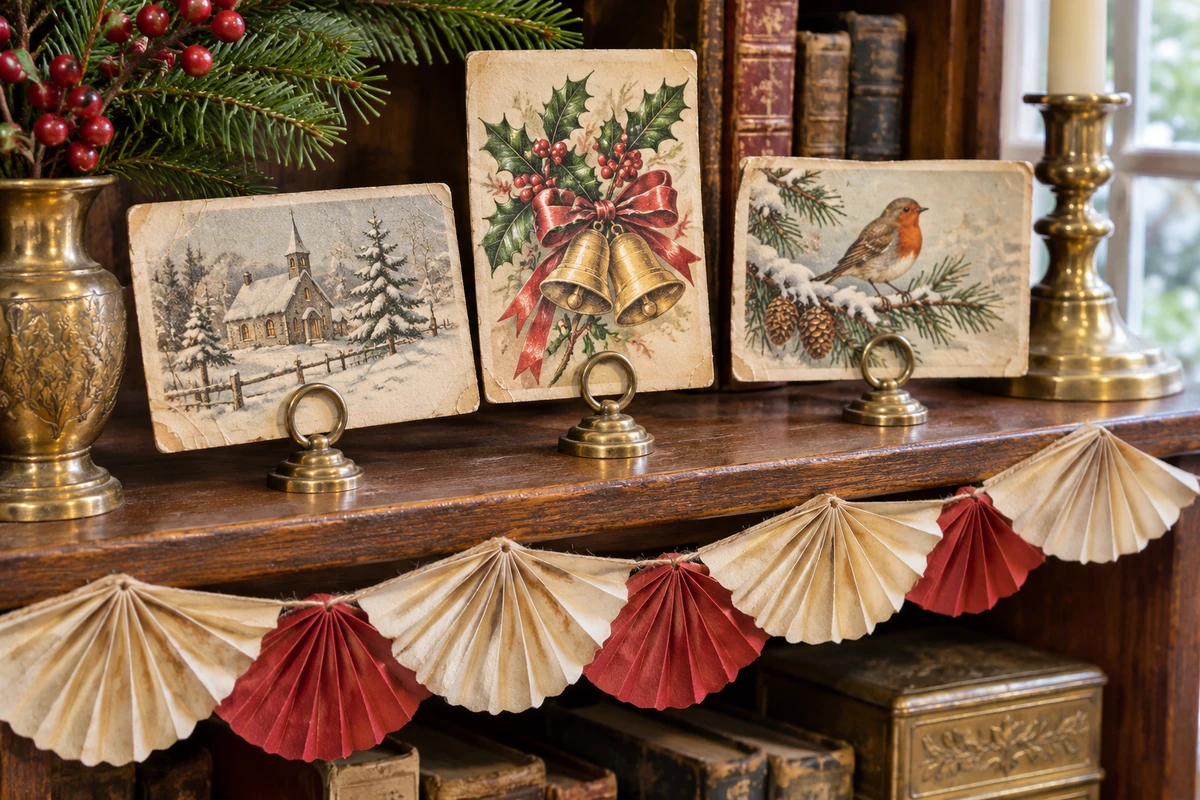
Look at the backgrounds as well as the illustrations. A muted pine green in two corners can connect scenes that were printed in different styles. If the cards have similar colors, vary the height of the holders so the silhouettes stay distinct.
Ways To Display The Paper
- Place a postcard with a large illustration where you usually approach the shelf.
- Leave enough space around the cards to see the corners and edges.
- Add a folded paper fan garland or a small ceramic piece for depth.
- Use a copy if you want to clip, string, or fold a card that matters to you.
Read both sides before you choose how to display a postcard. A handwritten message can be as interesting as the illustration. A clear freestanding holder lets you turn it around when you want to see the other side.
For a family photograph or letter that you’d rather keep private, display an unrelated card from the same color palette.
3. Style A Quilt And A Few Velvet Ribbons
A faded quilt and a few lengths of velvet ribbon give vintage Christmas decor a soft, collected look. Drape a folded quilt over one side of a bench and pull one color from it into the ribbon on a few gifts.
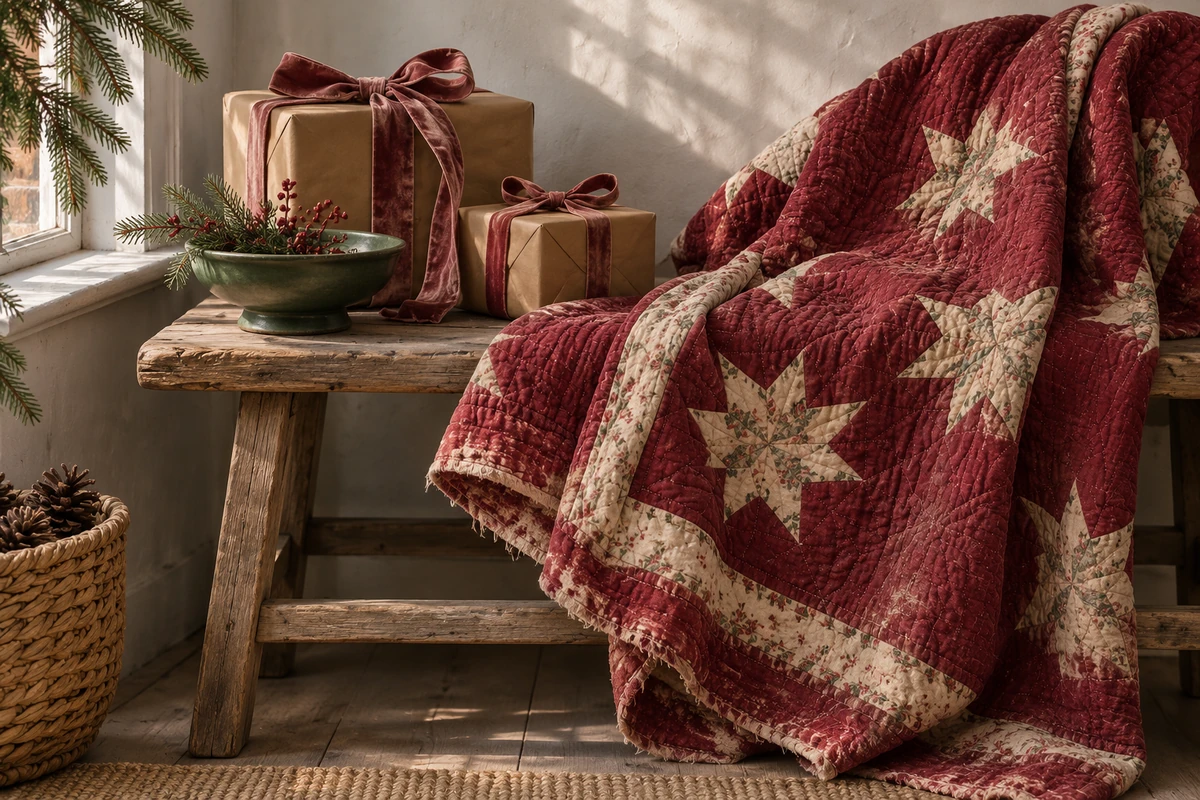
Look for the smaller colors in a quilt first. A line of dull red or dusty green may be enough to guide your gift wrap. Natural kraft paper keeps the color visible.
If the quilt is patterned, let the ribbon stay plain so you can still see the stitching and shapes in the textile.
How To Use A Textile You Want To Keep
- Check the seams and folds before bringing it out.
- Fold it loosely with an attractive section facing outward.
- Choose a clean, low-traffic spot where the textile can lie flat or rest lightly over a bench.
- Place any wrapped gifts beside it, leaving the patterned edge in view.
A contemporary quilt or blanket works here too if you want a similar palette for a piece you’ll use daily. Save a delicate heirloom for a quiet display and choose a sturdier layer for the seat everyone reaches for.
4. Arrange A Small Village Of Putz Houses
A few vintage-style putz houses can turn a short stretch of shelf into a Christmas village. These small decorative buildings work well in an uneven group where each roof and doorway can be seen from the front.
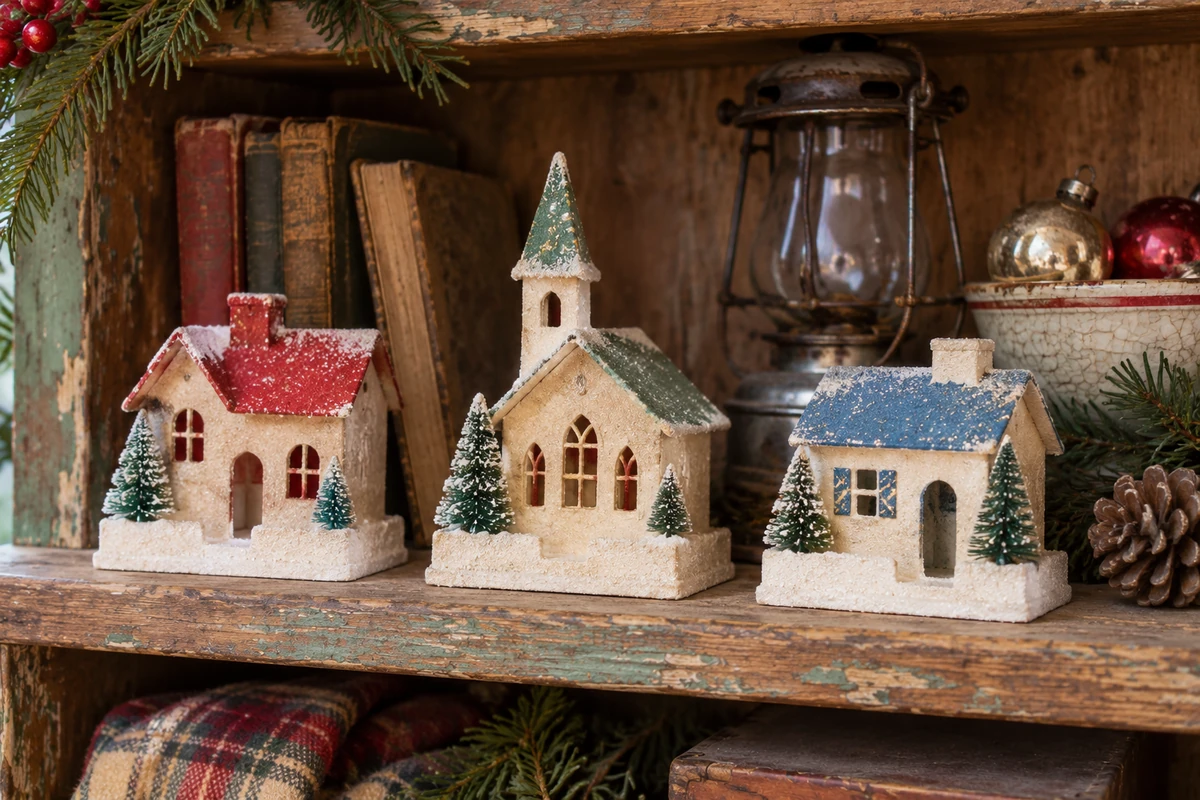
Start by choosing the tallest house and checking how far back it can sit without losing the roofline in shadow. Put a shorter house toward the front and leave a little daylight between the walls.
A group of three is easy to arrange because you can give each house a separate height or color without filling the whole shelf.
For an older cardboard house, inspect the base before picking it up. Support it from underneath and move it separately from anything that could catch an edge or dent a roof. A reproduction house gives you more freedom if you want a display you can move during the season.
How To Give The Houses A Sense Of Scale
- Set the tallest house near the back of the shelf.
- Place the smallest house nearer the front with its doorway visible.
- Add one dark tree or plain shape to break up two pale roofs if they blend together.
- View the scene from your usual seat and move any piece that hides the one behind it.
A strip of plain wool felt can give the buildings a shared base. If the houses already have interesting color and texture, leave the front edge bare. A bit of visible wood gives the village the appearance of a small scene with a boundary of its own.
5. Hang Old Brass Bells On A Tabletop Stand
A group of old brass bells makes a small Christmas display with a strong outline. Use a stable tabletop stand and one ribbon color so the differences in shape, finish, and size stay visible.
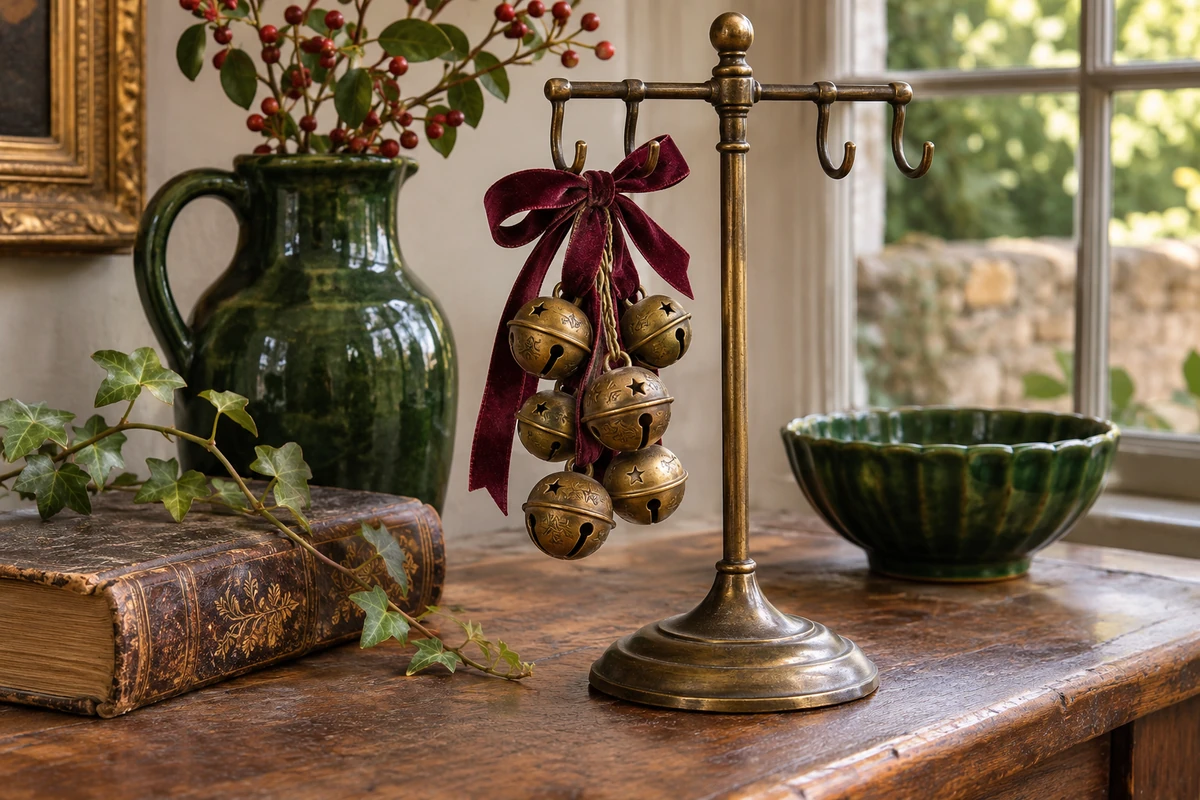
Look for bells with hanging loops that are still firmly attached. Test the stand with the bells in place before putting it near anything breakable. When the bells pull strongly to one side, move the heaviest one closer to the middle or use fewer bells.
Try a sturdy branch-shaped display stand if the loops sit at different heights.
Warm brass reads differently against white walls and dark furniture. On a white surface, a faded red ribbon gives the bells a clear edge. On a dark shelf, an unbleached cotton ribbon keeps the grouping from disappearing into the background.
If one bell has a finish you especially like, place it where it catches the daylight.
You can also place the bells loose in a shallow ceramic dish. That saves you from finding a hanger and lets you see the mouths and rims from above. Use a bowl with a little depth if you’re putting the display on a surface that gets bumped.
A single larger bell can do the job of a full cluster in a small entry.
6. Gather Mismatched Ironstone On A Sideboard
A few cream-colored ironstone dishes give vintage Christmas decor a quiet backdrop for color and texture. Arrange shallow plates and bowls on a sideboard with just enough space around them for the different rims to show.
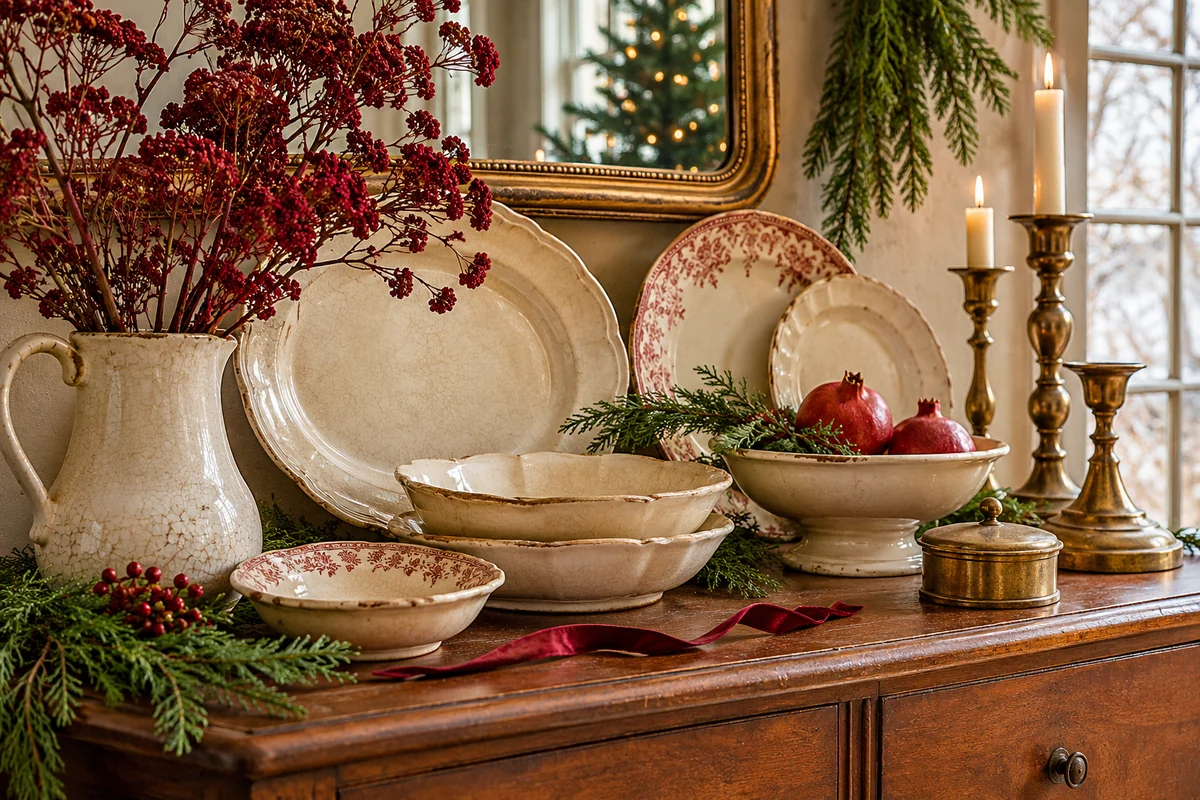
Start with the plate you can see most clearly from the doorway. Its scale will tell you how large the neighboring pieces can be. A pair of small dishes beside a serving platter often gives you more variation than three pieces the same size.
If a plate is displayed upright, use a stand sized to its height and depth.
Let one seasonal accent do the work. A cranberry-colored stem or a folded green napkin will show up well against the dishes. Save the larger centerpiece for a spot with enough depth to see it properly.
My guide to Thanksgiving table decor on a budget has related ideas for working with table pieces you already own.
Before buying a piece for the display, think about how you want to use it after Christmas. A bowl you’d enjoy seeing on your dresser can have a second life when the greens come out.
Give a piece with a chipped rim or uncertain finish a decorative job and use ordinary serving dishes for dinner.
7. Turn Old Thread Spools Into Tree Ornaments
Wooden thread spools make light, tactile ornaments that suit a tree with vintage pieces. Keep the grain visible and use a soft ribbon so the spool itself still reads as something from a sewing box.
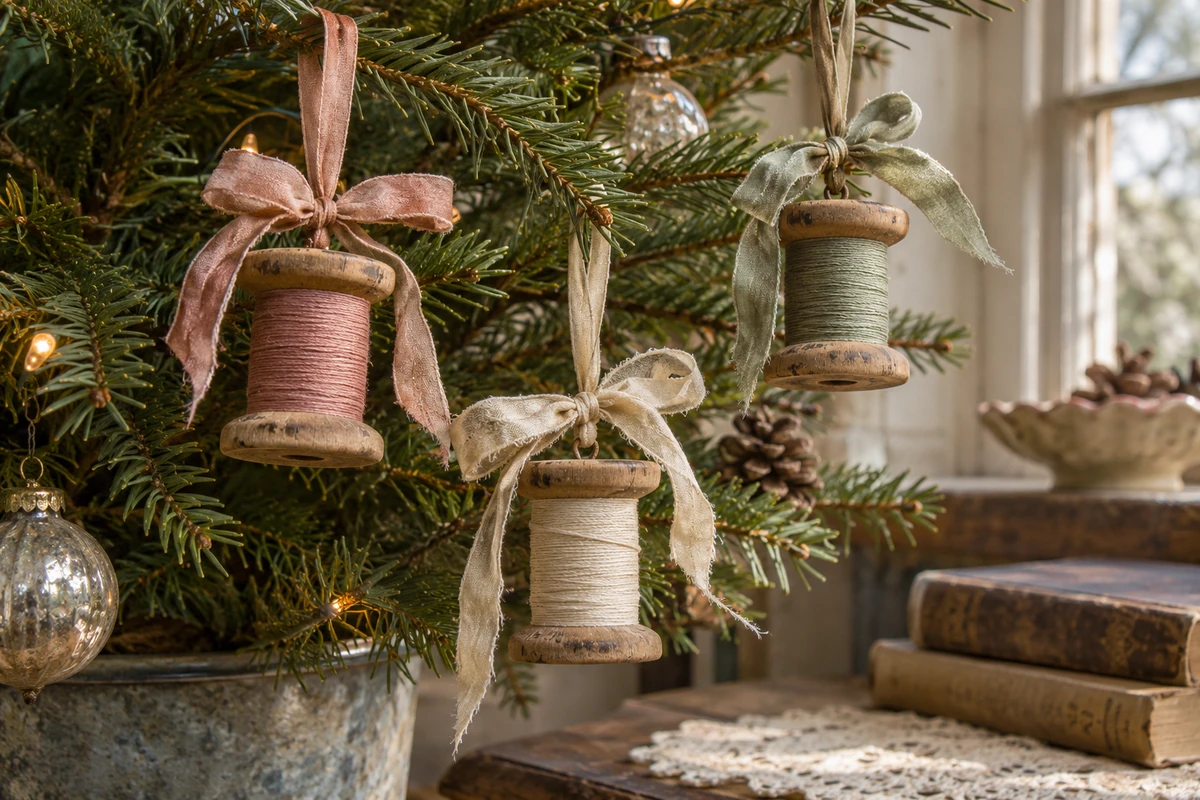
Choose spools with an open center and edges smooth enough for ribbon to slide through. If a paper label is still attached, keep it facing the side you’ll see.
Unpainted wood looks especially good beside aged silver glass because it softens the shine. For a different palette, use the ribbon to bring out a faded tone already on the tree.
Steps To Make A Spool Ornament
- Choose a spool with a smooth center hole and a ribbon that threads through it easily.
- Pass a length of ribbon through the center hole.
- Tie the ends together to make a hanging loop.
- Set the ornament on a branch and turn the old label toward the room if it has one.
- Check that the loop sits securely before adding the rest.
Leave a distinctive spool as it is and use a less collectible piece if you want to add a permanent finish. A modern wooden spool works if you’re starting without a sewing box or a secondhand find. Give it a soft cotton tape or narrow velvet ribbon for a similar look.
How To Choose Vintage Christmas Pieces Worth Keeping
Start with one kind of object you like looking at, such as old glass, paper, textiles, or tabletop decorations. Check where it will go, how you’ll handle it, and whether you have a place to store it.
A small group you can display easily will see more use than a box of pieces you hesitate to unpack.
Older pieces vary in condition, and the amount of work they need is often more meaningful than how old they look. A sound ornament with a faded finish may be ready to display.
A quilt with a loose seam may be better folded in a protected spot until you can decide whether it needs repair.
What To Check Before Bringing A Piece Home
- Glass: Inspect the cap and opening where the hanger attaches. Look at the piece from both sides, especially around the neck.
- Paper: Check for bent corners and ask yourself whether the card will fit your holder without trimming.
- Textiles: Look for strong seams and a fold that lets you show the best section without putting it under tension.
- Small objects: Check the base or hanging loop and make sure it fits the shelf or tree you already plan to use.
Photograph a finished group before taking it down, especially if I like the way several old colors look together. A picture makes it easier to recreate the spacing next year and can remind you which pieces work together if you find something new.
For a seasonal gathering where the display also needs to leave room for food and place settings, see my Friendsgiving table decor ideas for small spaces.
How To Pack A Mixed Vintage Christmas Collection
- Pack fragile glass in a divided box.
- Slide flat paper pieces into a folder.
- Fold and store textiles separately.
- Wrap unusually shaped decorations individually so they are easy to remove.
Label the outside of each container with a short description you can recognize from the shelf. “Silver glass and red finial” tells you more about what’s inside than “Christmas box.” For an older piece that needs attention before it can go back out, add a removable note to its individual wrapping.
Use the time you spend taking the display down to look for condition changes. Check for a loose cap on an ornament or a fresh crease in a paper house. Leave any repair until you can look at the object closely.
Keeping the collection small gives you time to look after each piece.
A photo of the arrangement is especially useful if you plan to add to it. Look at the empty spaces between objects as well as the colors. A broad plate may need more shelf depth than you remember, and a second quilt may give you more to store than you want to use.
That’s often enough to decide which purchases to skip.
If you prefer to carry one palette through several rooms, these ideas for classic Christmas decor in red, green, and gold can help bring the pieces together.
Frequently Asked Questions (FAQs)
Start with a piece whose color or finish you enjoy, then leave room around it. Below are answers about finding, displaying, and storing vintage Christmas decorations.
What makes Christmas decor look vintage?
Aged finishes, old-fashioned shapes, illustrated paper, and softened colors all contribute. Try combining a piece with visible texture, such as an aged glass ornament, with a quiet background that lets you see it.
Can I mix vintage and modern Christmas decorations?
Yes. Repeat a color or finish in both groups. A plain new ribbon in the same faded red as an older ornament can bring the two pieces together.
Try them beside each other before adding a third color.
What should I look for when buying secondhand ornaments?
Look for cracks, missing caps, and hangers that shift when handled. Check the size and weight against the place you plan to use them. Buy an ornament for how it looks and how you can display it if its age is uncertain.
How can I display vintage Christmas postcards without damaging them?
Use freestanding photo holders that support the card gently. Keep adhesives off originals and use a copy for any display that calls for clips, holes, or folds. A slightly larger holder makes the edges easier to see.
Final Thoughts
My favorite vintage Christmas decor ideas give a familiar piece a place where you’ll actually notice it. Put a soft red quilt beside the gifts, leave room around an old postcard, or bring a small group of glass ornaments together on one branch level. You can build that look slowly over several seasons.
Start with the colors and textures you like seeing together, then leave some space for the pieces you might discover next year. Give one well-loved object a prominent spot and leave the rest of the shelf open.

One Comment