Thanksgiving Table Decor On A Budget: 3 Easy Ideas
Thanksgiving table decor on a budget starts with a smaller shopping list, rather than a cheaper version of every decoration you see. I like to begin with the plates, glasses, and fabric already in the house, then choose one seasonal detail that makes them feel intentional.
A few pumpkins can do that job. So can a bowl of pears or a secondhand vase with a short stem. You do not need matching chargers, themed dishes, and a new centerpiece all at once.
Use the steps below to plan the table and decide which purchases you’ll use again.
Plan Your Thanksgiving Table Decor On A Budget Before Shopping
Set a decor-only limit, count your guests, and lay out one complete place setting before buying anything. This shows you what the table actually needs. Spend on a missing practical piece before adding another decorative layer.
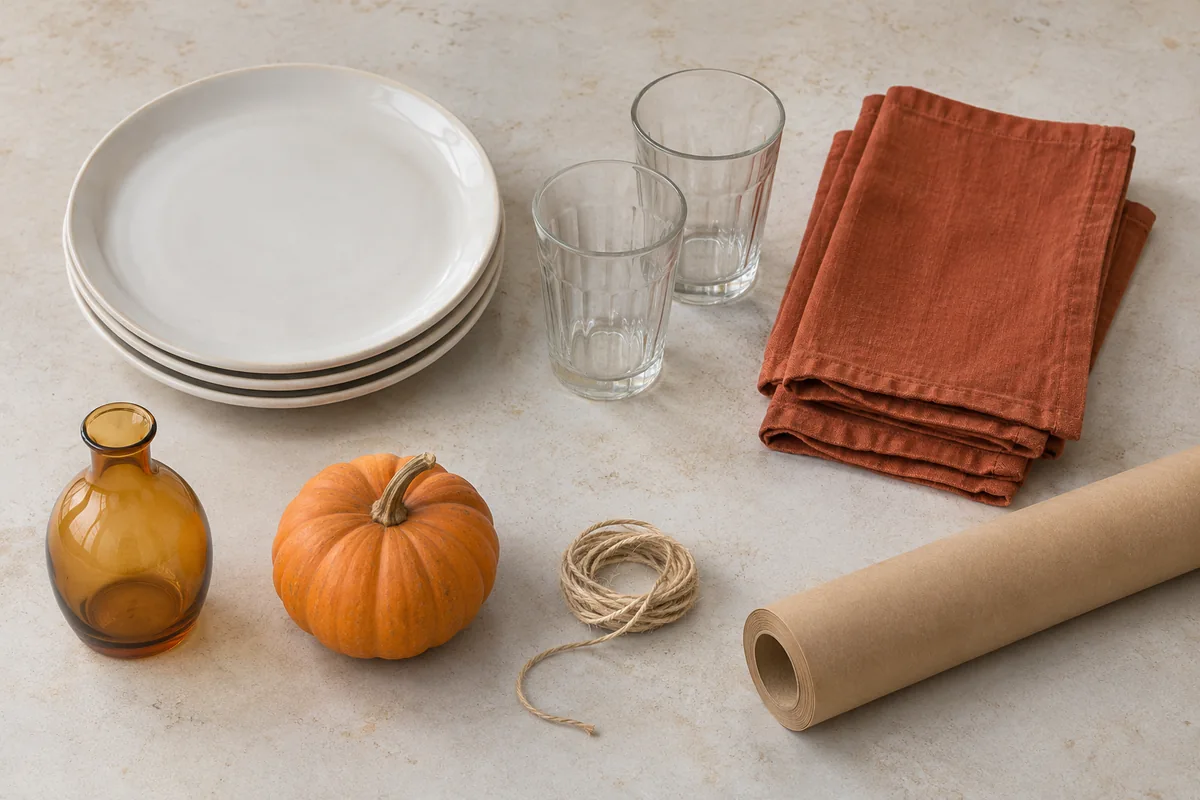
Start by separating dinner costs from decoration costs. Food, extra chairs, and dishes needed to serve the meal belong on their own list. Otherwise, an apparently affordable table plan can quietly swallow money meant for groceries. The example below assumes you already have enough plates, glasses, cutlery, and a usable dining surface.
Take ten minutes to gather your options in one place. Include plain napkins, tea towels you reserve for table use, small trays, jars, baskets, and fall decorations from another room. Look at these together before deciding that you need a different color. A white plate beside a rust-colored napkin might already give you the seasonal contrast you wanted.
A Sample $30 Decor Allocation
This is a hypothetical planning allowance in US dollars, not a set of current store prices or a promise that these items cost the same everywhere. Adjust the amounts to your local prices, guest count, and what you own. Include tax and any travel or delivery cost within the limit.
| Item | Example spending cap | Before you buy |
|---|---|---|
| Washable fabric or napkins | $8 | Use existing clean linen first |
| One reusable focal piece | $8 | Check trays, bowls, or vases at home |
| Paper and cord for simple details | $3 | Use plain paper you already have |
| Flowers or seasonal produce | $6 | Choose one small accent, not both |
| Reserve for tax and incidental costs | $5 | Reduce another item if this is insufficient |
| Total decor limit | $30 | Unspent money stays unspent |
My takeaway: Treat each number as permission to spend up to that amount, rather than a target you have to reach. If your own tray works, keep its allocation in the reserve instead of finding another object to buy.
For a genuinely no-purchase version, remove every item in the middle column. Use the bare table, your everyday dishes, folded napkins, and a bowl already in the kitchen. The seasonal detail can be the color of the food itself. You can still make the arrangement feel deliberate by repeating one color and clearing unrelated objects away.
The most useful budget is based on the table you have, the guests you are serving, and the pieces you already own. Set the total first, reserve money for incidental costs, and buy only the missing items that make the meal easier or the arrangement more coherent.
Make A Small Shopping List
- List up to three items you actually need.
- Write down a size or quantity for each one, such as a low vase under eight inches tall.
- Photograph your dishes and napkins so you can compare colors while shopping.
Also decide where the serving dishes will go. A table with family-style food needs more open space than one with a separate buffet. Buying a long decorative arrangement before making that decision often creates the need for a second purchase or a last-minute rearrangement.
Choose Thrifted Pieces That Earn Their Place
Look for useful shapes, sound condition, and easy coordination. Small trays, simple vases, washable linens, and plain serving accessories can be helpful finds. A bargain is only useful if it fits your table, your storage, and the way you serve dinner.
Shop from the largest practical gap down. If you need a way to carry glasses, a sound tray may be more useful than six novelty ornaments. If your table already feels busy, the right purchase may be nothing at all. Empty space is part of the arrangement, especially when people are passing dishes.
A Secondhand Shopping Checklist
- Measure your table and note the space available between place settings.
- Check fabric for stains, damaged seams, and care labels before buying.
- Check glass for chips and cracks, including around rims and bases.
- Make sure a tray sits flat and any handles feel secure.
- Choose colors that work with your existing dishes in ordinary daylight.
- Add the cost of cleaning, repairs, or replacement parts to the purchase decision.
- Leave behind an item that only works if you buy several other things.
Mixing white plates can be a practical way to coordinate different shapes, but do not treat an unknown vintage plate as automatically suitable for food. The FDA explains that some traditional pottery can release lead into food. Follow any “Not for Food Use” label. For pieces with uncertain safety or origin, keep food on known food-safe tableware and use the secondhand vessel for non-food decoration instead. Washing or boiling does not make lead-containing pottery safe for serving.
That distinction also makes shopping simpler. You can enjoy an interesting decorative vase without needing it to become a gravy jug. Choose a separate, suitable container for anything that will touch food, and keep decorative objects away from serving surfaces.
Coordinate One Feature, Not Every Detail
Try matching the color family of the dishes while allowing their edges to differ. Or keep your everyday mixed plates and repeat the same napkin color at each seat. You need one visual connection, rather than a full replacement set.
Before buying a set of glassware, count what you already have. Different clear tumblers can look comfortable together when their scale is similar. For a small dinner, arranging four slightly different glasses evenly may be more useful than bringing home twelve you have no place to store.
I also prefer a reusable shape over a Thanksgiving slogan. A plain brown bowl can hold pumpkins now, fruit later, and folded napkins at another meal. That flexibility matters more to me than getting the lowest possible price on a piece with only one use.
Reuse Fall Decor Without Buying A Second Collection
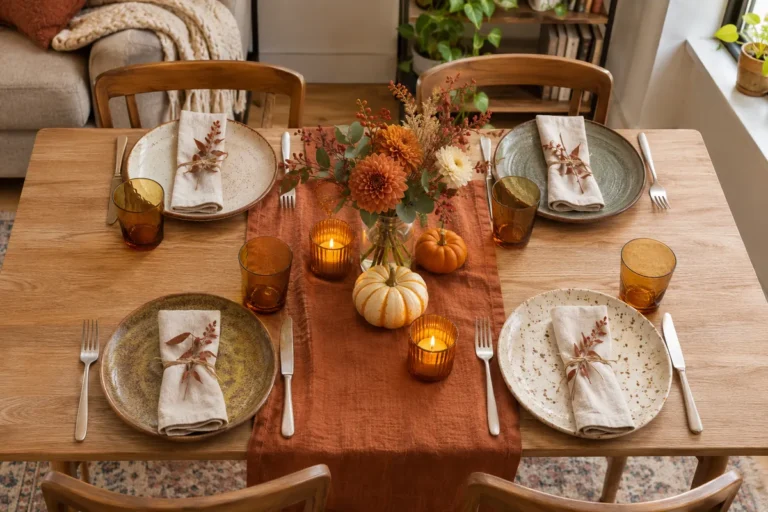
Move a few existing pieces to the table and leave the rest where they are. A tray, one small vase, and a few pumpkins usually give you enough to work with. Repeating their colors in the napkins helps the table feel connected without filling every gap.
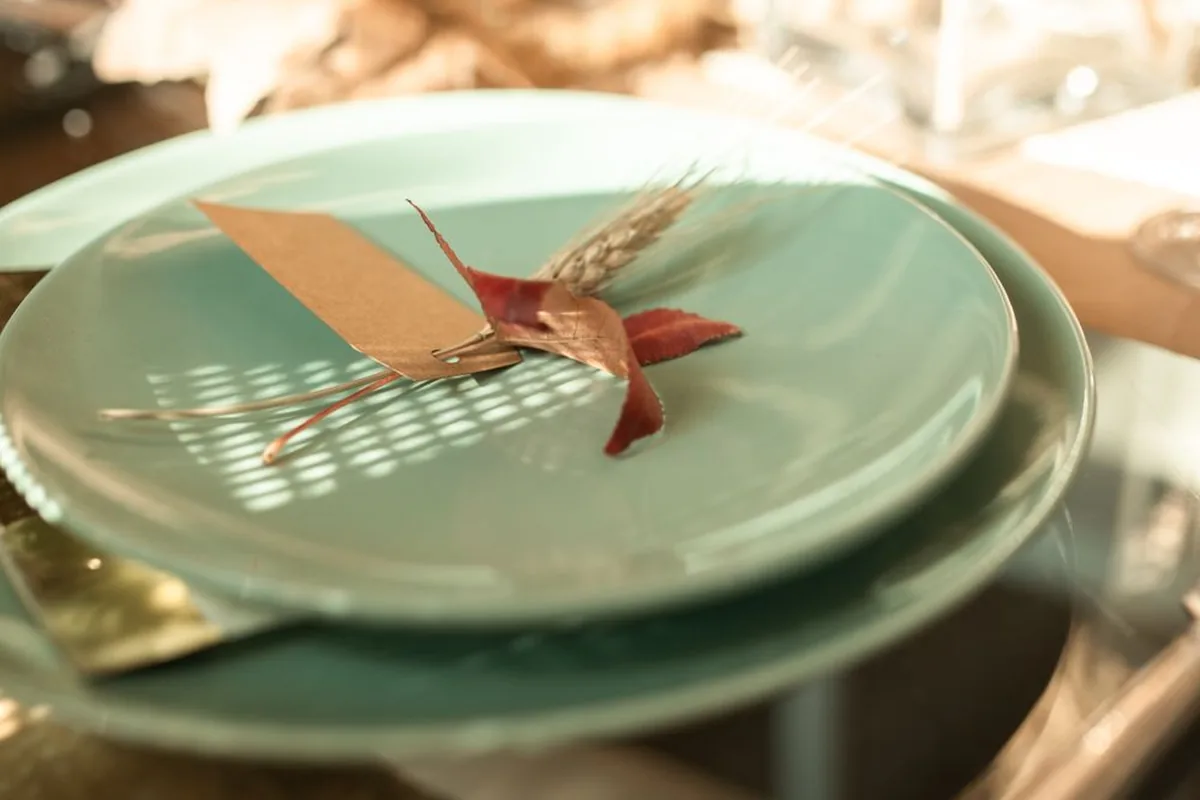
Choose a limited palette from what is already available. For example, white plates, olive fabric, natural wood, and orange pumpkins can work together without another color. If you have cream dishes and rust napkins instead, let those lead the arrangement. There is no need to purchase a specific shade to follow a photograph exactly.
Edit Before Adding
Put the largest item in position first. Then add one smaller seasonal element and step back. If the arrangement already reads clearly from the doorway and from a seated position, stop there. The next item needs a reason to stay beyond “there was a space.”
Keep everyday decorations out of the dining area while you test the table. Mail, spare packaging, and a crowded sideboard can make a modest centerpiece feel lost. Clearing them gives you a better view of what the table actually looks like, without changing anything you own.
For fabric, use a runner only if it helps the surface or color scheme. A visible wooden tabletop can be attractive on its own. If you use cloth from another purpose, check that it is clean, stable, and appropriate near food. Keep loose ends away from chair legs and anywhere they could be pulled.
Borrow With A Clear Plan
Borrowing can fill a one-day gap, particularly for a serving tray or a few additional napkins. Agree on which items you are borrowing and when they will be returned. Take a quick photo so similar dishes do not become mixed up during washing and packing.
Avoid borrowing something fragile or irreplaceable just to make the table look more formal. A comfortable meal is easier to enjoy when you are not worrying about a special object beside every elbow. Use sturdy pieces where guests will be reaching and passing food.
For a more detailed layout, see my simple Thanksgiving table setting ideas. Here, keep the emphasis on what deserves a place in your spending plan, rather than adding another layer to each setting.
Try Three Affordable Table Combinations
Build each table around one repeatable color and one low focal point. These combinations use ordinary dishes and a small number of accents. Their actual cost depends on what you already own, so use the examples as shopping filters rather than fixed-price packages.
White Plates, Olive Napkins, and Mini Pumpkins
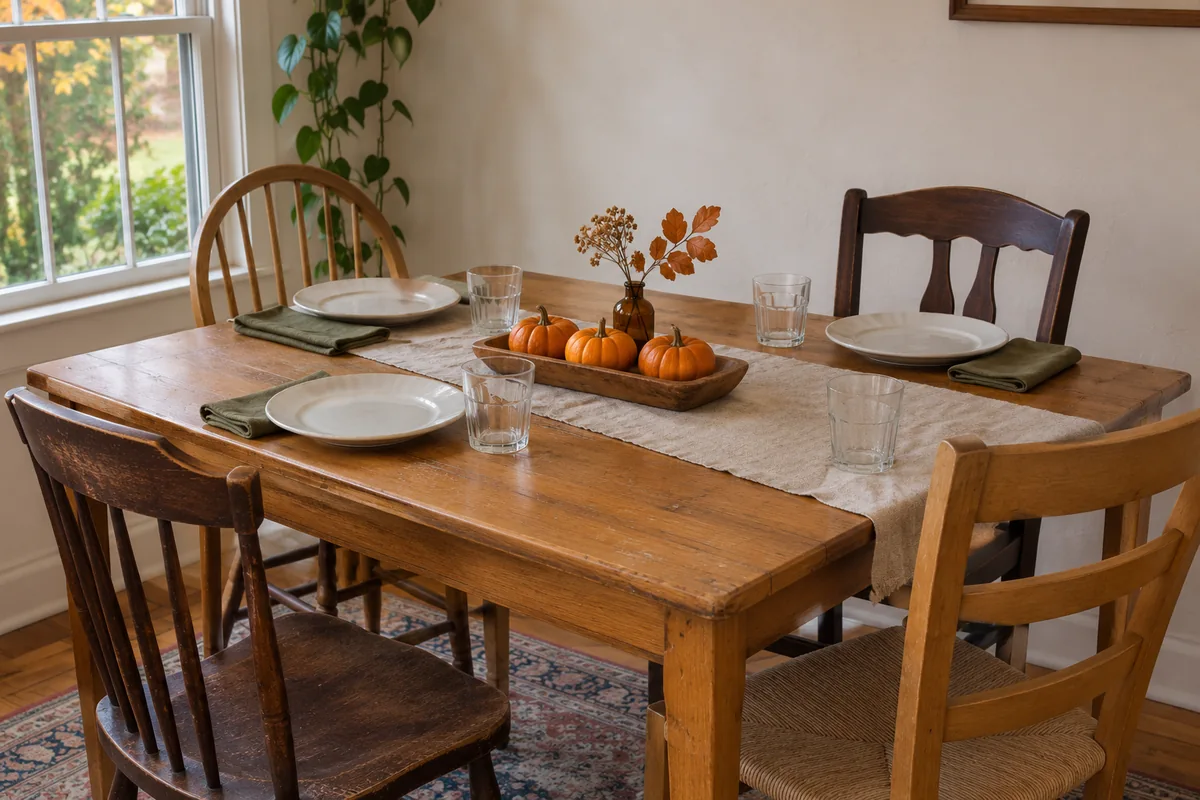
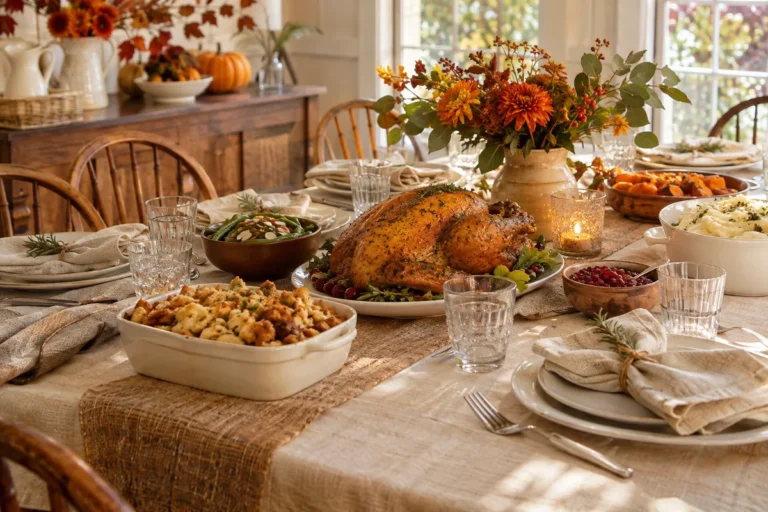
Use a light runner on a wooden table, white plates, and olive-colored napkins. Place a few mini pumpkins on a shallow tray down the middle. Keep any small vase off to one side of the tray, leaving room for water and serving dishes.
The repeated white and green do most of the work here. You do not need chargers, napkin rings, or a second set of glasses. If your napkins are beige, use those instead and let the pumpkins provide the stronger color. If there is no runner, the bare table still works.
What to buy: Only the small seasonal accent, if there is nothing suitable at home.
What to skip: A matching pumpkin-shaped plate at every seat. It adds another item to store without solving a practical need.
Set out one place setting before committing to the whole arrangement. Put an empty serving bowl in its likely position, pull a chair out, and check the sightline across the table. If the runner is too wide or the tray takes up the food space, remove the layer that causes the problem.
Kraft Paper, Rust Napkins, and A Bowl of Pears
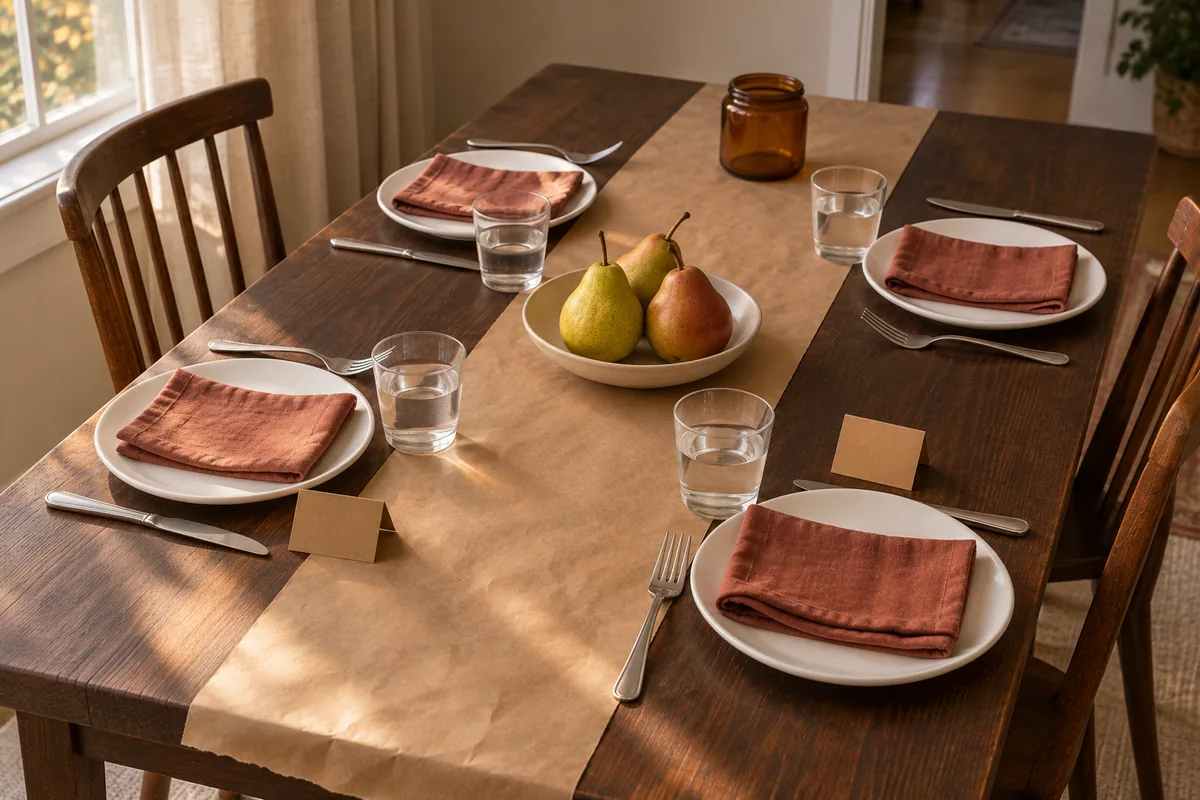
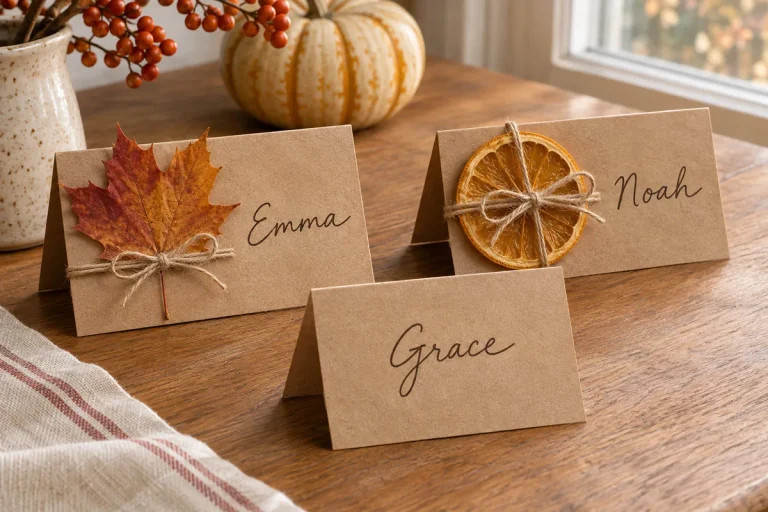
Place a narrow strip of plain kraft paper along the center of the table, then use your everyday plates and rust or terracotta napkins. Put a few washed whole pears in a clean, food-safe bowl. Simple paper place cards can repeat the paper color without requiring another material.
Keep the paper clear of hot serving dishes unless a suitable heat-resistant trivet is underneath them. Paper is decoration, not a substitute for protecting your table. Use flameless candles or leave candles out of this combination, especially with loose paper nearby.
What to buy: Paper only if you will use the remaining roll for other purposes.
What to skip: A large roll bought solely for one narrow strip. An existing cloth runner or a bare table may cost you nothing and do the same visual job.
Fruit is a useful option if it is already part of your food plan. Keep it clean and separate from anything that is not food-safe, then use it normally afterward. Do not buy more produce than you expect to eat just because a larger arrangement looks fuller in a photograph.
A Reused Harvest Tray and Plain Place Settings
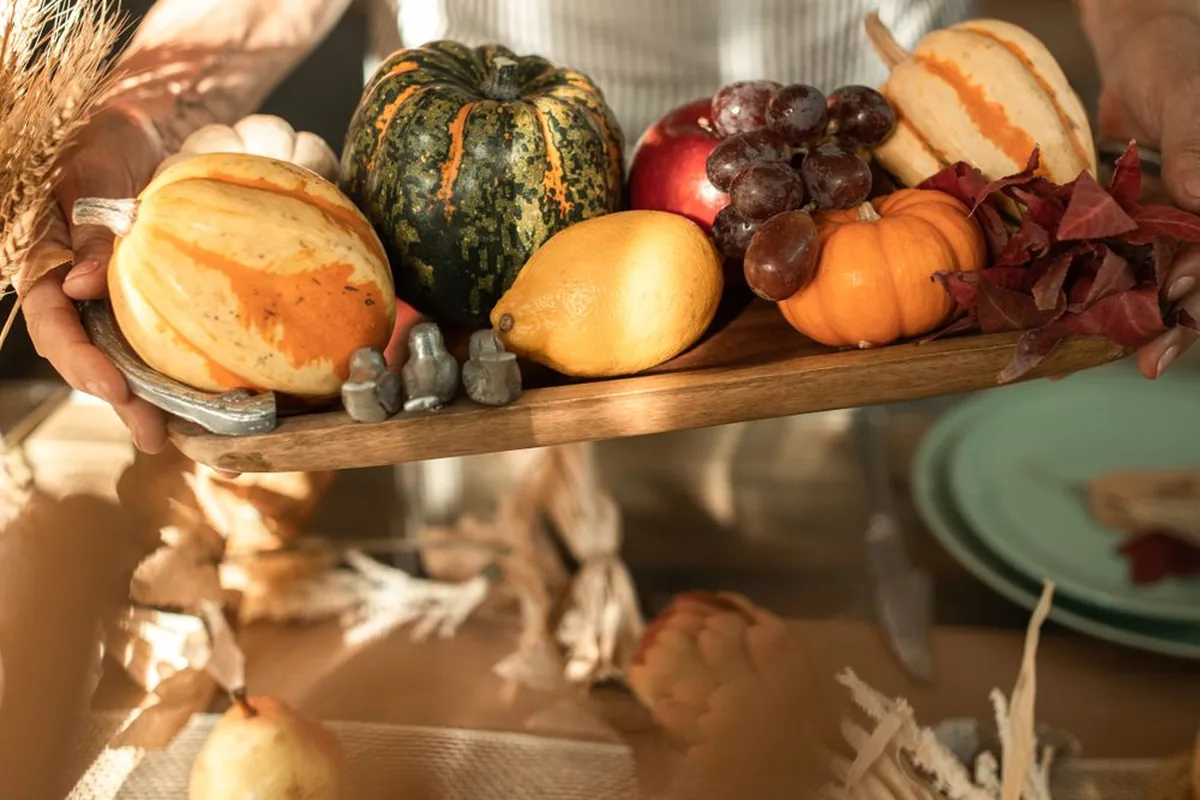
Gather a few existing seasonal pieces on a shallow tray and let that be the table’s only decorative group. Plain dishes and simple folded napkins keep it from competing with the food. This approach is helpful if you are moving fall decorations from a shelf rather than shopping again.
What to buy: Nothing until the tray is assembled.
What to skip: Extra filler bought to hide every bit of the tray. A few separate shapes are easier to adjust and remove when dinner arrives.
If the tray is too large to stay on the table, use it on a buffet or sideboard. That still gives the dining area a seasonal focal point. Moving the decoration a few feet is often more useful than replacing it with a smaller new purchase.
You can find more hands-on arrangements in my DIY Thanksgiving centerpieces using natural materials. For this table, choose one of those ideas rather than combining several centerpieces together.
Avoid The Purchases and Styling Mistakes That Add Up
Watch for small purchases that depend on more small purchases. Napkin rings need coordinating napkins, novelty dishes need storage, and an oversized arrangement may force you to buy something smaller. Test a usable layout first, then edit your list around it.
Buying For A Photograph Instead of Dinner
A densely decorated table can leave nowhere for the bread, water, or a guest’s hands. Put your largest serving dish on the table during the test layout. If you plan a buffet, leave space for people to set a plate down comfortably when they sit.
Sit in two opposite chairs before you finish. You should be able to see the person across from you and reach your own glass without moving decorations. Tall or sprawling pieces can go elsewhere in the room. There is no benefit in paying for an arrangement that has to leave the table as soon as the food arrives.
Assuming Every Cheap Item Saves Money
Compare the complete cost and the likely use. A damaged vase that needs supplies to repair it may be less practical than the jar already in your cupboard. A low-priced linen set that does not fit the table may become a more expensive problem than leaving the surface bare.
Give yourself a pause before buying multiples. One sample napkin can tell you whether the color works, but six impulse purchases are harder to undo. Check return policies for new items and understand that many secondhand purchases may be final.
Adding Flame To Dry Decorations
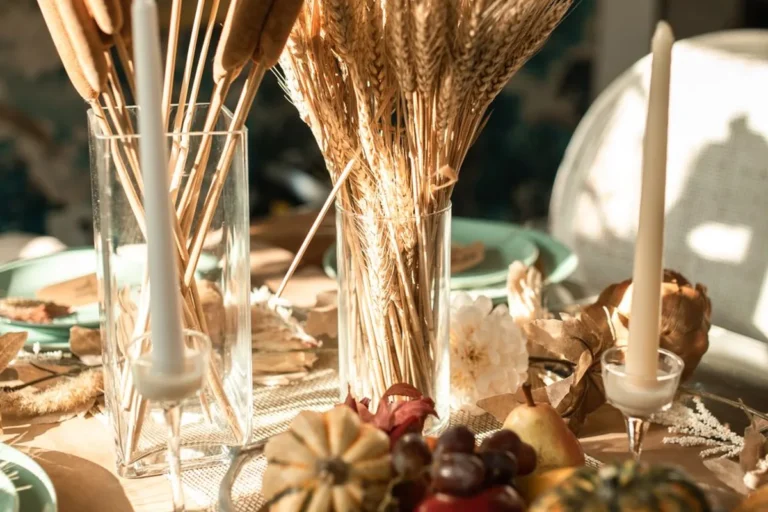
For paper, dried stems, and loose fabric, my preference is a flameless candle or no candle. If you choose real candles, the U.S. Fire Administration advises stable holders and at least 12 inches of clearance from anything that can burn. Blow them out when you leave the room. A decorative arrangement should never depend on putting dry materials beside an open flame.
A practical Thanksgiving table leaves room for the meal, keeps decorative materials away from food and heat, and uses pieces that are easy to move. Repeating a color across napkins and one small accent can create a coordinated look without adding something new to every place setting.
Forgetting The Day After
Before paying for an item, decide where it will go afterward. A vase can hold ordinary flowers, a washable napkin can return to the linen drawer, and a tray can stay useful all year. If there is no realistic next use or storage space, reconsider it.
Keep a short note of what worked, including the number of seats and the size of the runner. A photo of the finished table can help next year, but the note matters too: what had to be moved, what was never used, and what you would leave out. Those details can reduce repeat purchases more effectively than another saved shopping list.
Frequently Asked Questions (FAQs)
What is the cheapest way to decorate a Thanksgiving table?
Start with a clean, cleared table and the dishes you already own. Repeat one napkin color, then add a small bowl or tray as the focal point. If there is nothing seasonal available, keep the arrangement simple rather than purchasing several decorations just to fill space.
How much should I budget for Thanksgiving table decor?
Choose an amount that fits after food and practical hosting needs are covered. A decor-only cap can be zero if you reuse everything. The $30 allocation above is an example for planning, not a current-price estimate or a requirement for a welcoming table.
Can mismatched dishes look good together?
Yes. Repeat one feature, such as white plates, similar-sized glasses, or the same napkin color. Keep the rest of each place setting simple. Check that any dishes used for food are suitable for that purpose, especially if they are older pieces of uncertain origin.
What should I look for at a thrift store?
Look for sound trays, low vases, washable linens, and useful shapes that fit your existing tableware. Measure first and check condition carefully. Include any cleaning or repair costs in your decision, and avoid pieces that require several more purchases to make them work.
Do I need a tablecloth and a runner?
No. Use whichever helps protect or visually organize your particular table, and skip both if the bare surface works for your meal. Follow the table’s care instructions and use appropriate trivets for hot dishes. Decorative paper or thin fabric does not replace heat protection.
Final Thoughts
I like Thanksgiving table decor on a budget best when the spending plan is smaller than the collection of things already in the house. Start with one real place setting, choose a limited palette, and make a short list of genuine gaps.
A useful thrifted tray or a few seasonal accents can be enough. Give the serving dishes and your guests room, then stop adding layers when the table works. The aim is a place where people can settle in and enjoy dinner, with pieces you feel happy to clean, store, and use again.

6 Comments