Christmas Sugar Cookies That Hold Their Shape
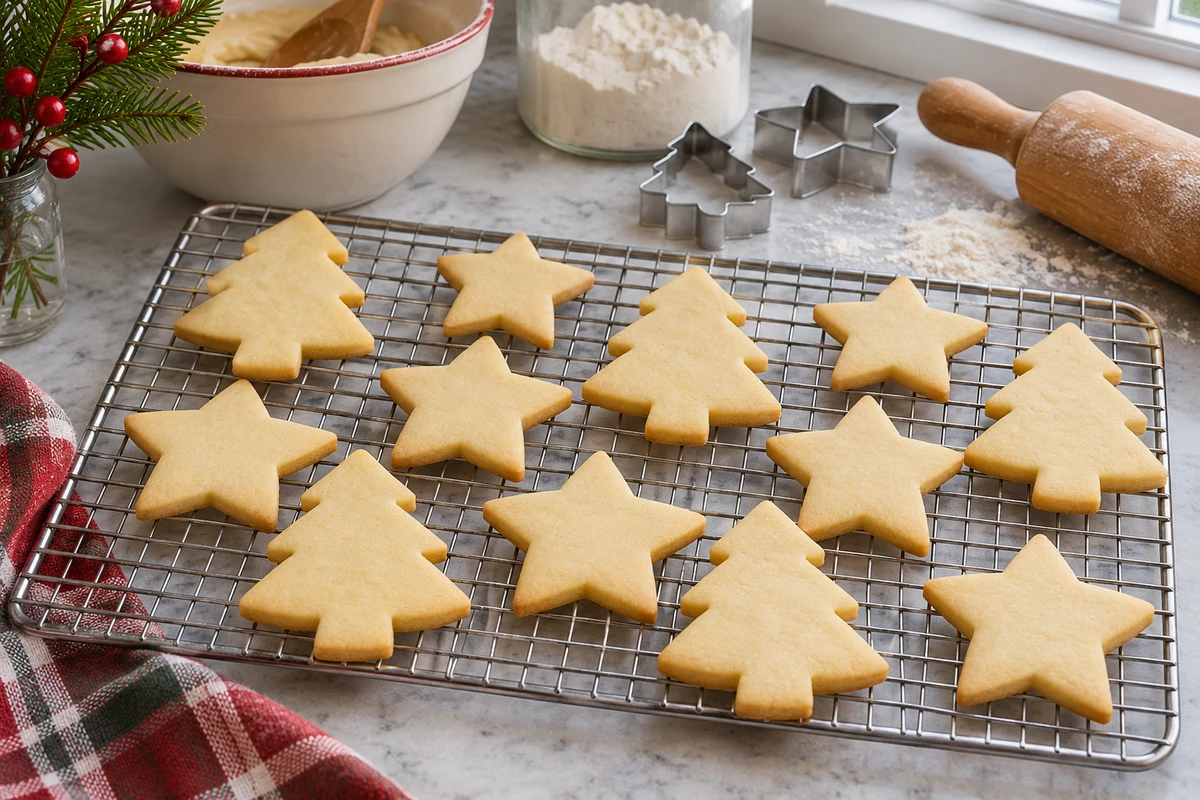
Christmas sugar cookies hold their shape when the dough is rolled evenly, stays cool enough to move cleanly, and goes onto a cool baking sheet. This buttery cutout recipe gives you stars and trees with defined edges, ready to serve plain or decorate once they cool.
I’ll walk through mixing and chilling, rolling the dough, moving cutouts, and baking a small test tray. Start with two uncomplicated shapes so the first tray tells you how the dough and your oven behave before you cut the rest. The formula is adapted from King Arthur Baking’s Holiday Butter Cookies.
Ingredients And Equipment
This dough uses confectioners’ sugar, salted butter, and an egg yolk. There’s no baking powder or baking soda. Use a scale if you have one, especially for the flour.
Cup measurements can vary depending on how tightly you pack the flour.
Ingredients
- 142 g (1¼ cups) confectioners’ sugar
- 255 g (18 tablespoons) salted butter, at room temperature
- 1 large egg yolk
- ½ teaspoon table salt
- ¼ teaspoon Fiori di Sicilia or another baking flavoring of your choice
- 330 g (2¾ cups) all-purpose flour
- Up to 1 tablespoon water, only if the dough needs help coming together
Equipment
- Kitchen scale or measuring cups and spoons
- Electric mixer and mixing bowl
- Rolling pin and a little extra flour for dusting
- Two cookie cutters of similar size
- Parchment, baking sheets, and a thin spatula
1. Mix And Chill The Dough
Mix just until the dough comes together, then chill it in two flat disks. A disk starts closer to the shape you’ll roll and lets you work with one portion while the other stays cold.
- Beat the sugar, butter, yolk, salt, and flavoring together until smooth.
- Mix in the flour. Keep mixing briefly if it looks sandy at first. If it still won’t come together, add a little water, up to one tablespoon.
- Divide the dough in two and press each half into a flat disk.
- Wrap both disks and refrigerate for two hours or overnight.
- Take out one disk about 20 to 30 minutes before rolling. Start when it’s still cool but bends slightly under the rolling pin.
A hard disk can crack around the edges as soon as you roll it. Let it sit a little longer and try again. If the dough sticks or feels greasy, return it to the fridge while you prepare the cutters and baking sheet.
2. Roll, Cut, And Transfer The Shapes
Roll one disk to an even ⅛ to ³⁄₁₆ inch. Use the thicker end of that range for pointed stars and narrow tree tips, especially if you’ll move the cookies more than once.
- Heat the oven to 350°F (175°C) and line a baking sheet with parchment.
- Lightly flour the work surface and rolling pin. Roll outward from the center until the dough is even.
- Press the cutter straight down and lift it cleanly.
- Remove the scraps around each shape before sliding a thin spatula underneath.
- Place similar-sized cookies on the same sheet so you can judge doneness together.

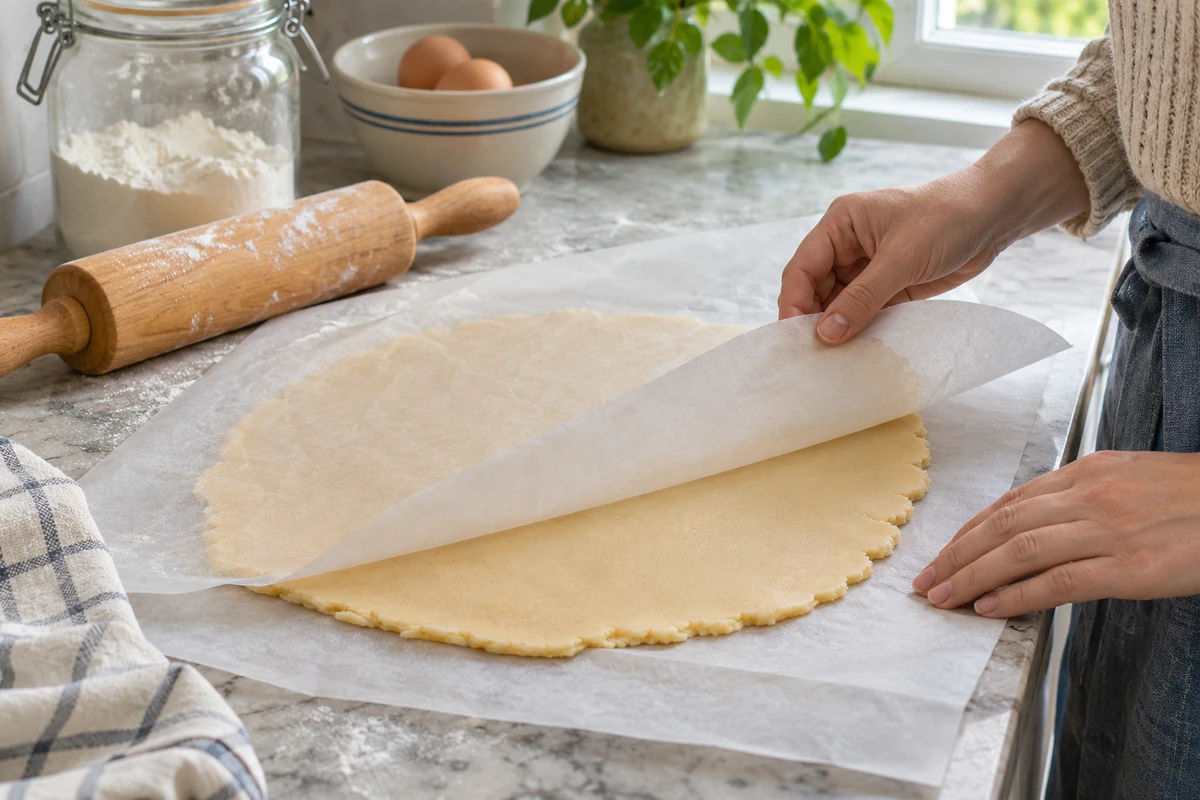
If you prefer rolling between two sheets of parchment, peel off the top sheet before cutting and check whether the dough still lifts cleanly. If the first shape bends as you move it, chill the cut sheet briefly and try again. Keep the second disk cold until you’re ready to use it.
To help Christmas sugar cookies hold their shape, keep the dough cool enough to lift cleanly, roll it to the same thickness across the sheet, and move the cutouts to a cool pan. If a star loses its points before it reaches the oven, fix the handling before you change the recipe.
3. Bake A Test Tray And Cool The Cookies Flat
Bake the cutouts for 12 to 14 minutes, until they’re set and the edges are barely golden. Start checking at 12 minutes. Small shapes or thinner sections can color before wider shapes on the same tray.

- Bake two or three representative shapes first.
- Check the edges and centers before pulling the tray.
- Let the cookies cool flat on the pan. If you need the pan back, slide the parchment onto a flat surface as the source recipe suggests.
- Compare the cooled shapes with the cutters before baking the full batch.
- Repeat with the other disk and rerolled scraps. Use a cooled sheet for the next tray.
Group scraps gently and roll them again before they warm up too much. Save the most detailed shapes for the first roll if you’re worried about handling. Plain rounds or wide stars make a good last tray when there’s only a little dough left.
How To Troubleshoot Cutouts Before Baking The Rest
Use the test tray to identify where the shape changed. If the cutouts looked soft before baking, focus on how you rolled or transferred them. If they looked sharp going in and widened in the oven, check the temperature of the dough and the baking sheet.
- The dough cracks under the pin. Wait a few minutes and apply lighter pressure on the first pass.
- The cutter sticks. Dust its edge lightly and press straight down. Lift it before pulling away the scraps.
- Tree tips stretch on the spatula. Chill the rolled dough and support the whole cookie as you lift it.
- Some cookies brown much sooner. Group the next tray by size and check that the dough is equally thick at the edges and center.
- The second tray spreads more. Use a cool pan and return softened cutouts to the fridge before baking.
The FDA advises against tasting raw dough because uncooked flour and eggs can carry harmful germs. Wait for a baked cookie to check the flavor and texture.
Once the cutouts have cooled, use these decorated Christmas sugar cookie designs to choose a finish. The Christmas cookie decorating tips explain how to test the icing before you pipe.
Frequently Asked Questions
Test a few cutouts before baking the full batch. Here’s how to check dough thickness, handle detailed shapes, and tell when pale cookies are ready.
Can I make the dough the day before?
Yes. The source recipe allows an overnight chill. Wrap both disks and let one soften just enough to roll while the other stays in the refrigerator.
What thickness works for cutout sugar cookies?
This formula calls for ⅛ to ³⁄₁₆ inch. Use the thinner end for a delicate bite and the thicker end for sturdier tips. Try to keep each tray consistent.
Can I use an intricate cutter for my first batch?
Yes, but test it alongside a simple cutter. Thin antlers or tiny tips take more care to release and transfer. A wider tree or star is easier to move and lets you learn how the dough behaves.
Why do my cookies look pale after baking?
The source recipe calls for set cookies with only a little browning at the edges. If the edges have just begun to color and the cookie has set, check a cooled one before extending the bake for the whole tray.
Do I need to ice these Christmas sugar cookies?
No. Serve them plain once they cool, or save the flat tops for decorating. Let them cool fully before stacking them or adding icing.
Final Thoughts
Keep the first batch of Christmas sugar cookies simple. Roll evenly, cut a few stars and trees, and see how the edges look on the test tray. You can chill the dough again if a shape bends during transfer or watch thinner cookies more closely if they color first.
Once you know how the dough behaves, cut the remaining cookies a tray at a time. Leave them flat until they cool. Set aside a few plain ones for anyone who prefers them, then use one extra cookie to test the icing before decorating the rest.



2 Comments