Winter Window Painting Ideas That Last Beyond Christmas
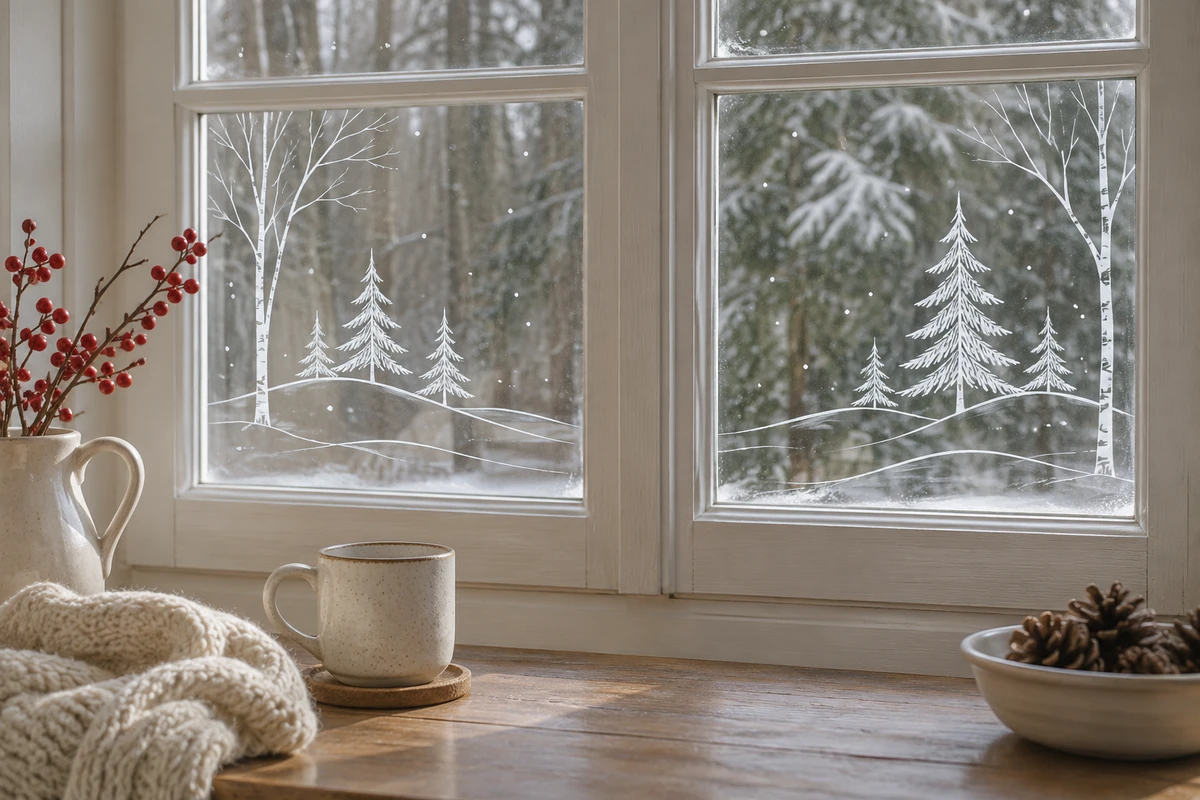
These six winter window painting ideas suit the quieter weeks after Christmas. Try frost ferns in a narrow corner, snowy pines across the bottom, or scattered dots on just one side. Woodland animals, cottage silhouettes, and a moonlit sky work when you have more glass to draw on.
Look at the window from where you usually sit before choosing a design. Keep the part you look through most often clear, and use a removable product intended for your glass. A small design can carry on into January without taking over the room.
1. Paint Frost Ferns In The Lower Corners
Frost ferns look at home on tall glass because the branches can taper along the edge. Start with one main curve in each corner and give its smaller branches space to separate.
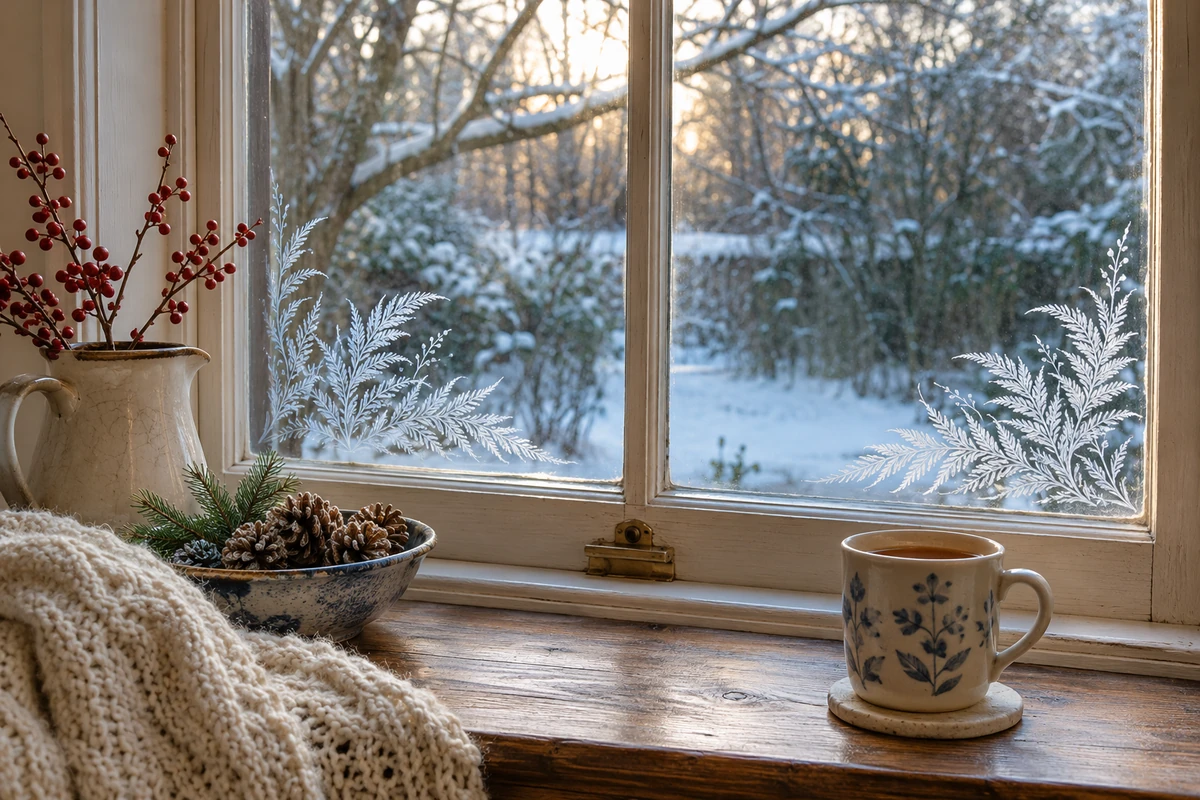
Make one side taller if you look through the middle of the pane every day. A smaller echo on the opposite side gives you balance without closing in the view. Leave the thin tips where they can show against a darker outdoor background.
On glass facing a bright sky, a few thicker branches near the base will be easier to see.
Look at the design from the seat you use most. If the two fern shapes seem to meet from that angle, shorten the smaller one. On divided glass, let each fern finish within its own pane so the lines don’t appear to break at the frame.
2. Set A Row Of Snowy Pines Below The View
A pine silhouette across the base of a window suggests a snowy forest while keeping the upper view clear. Vary the tree heights and leave a gap where you like looking outside.
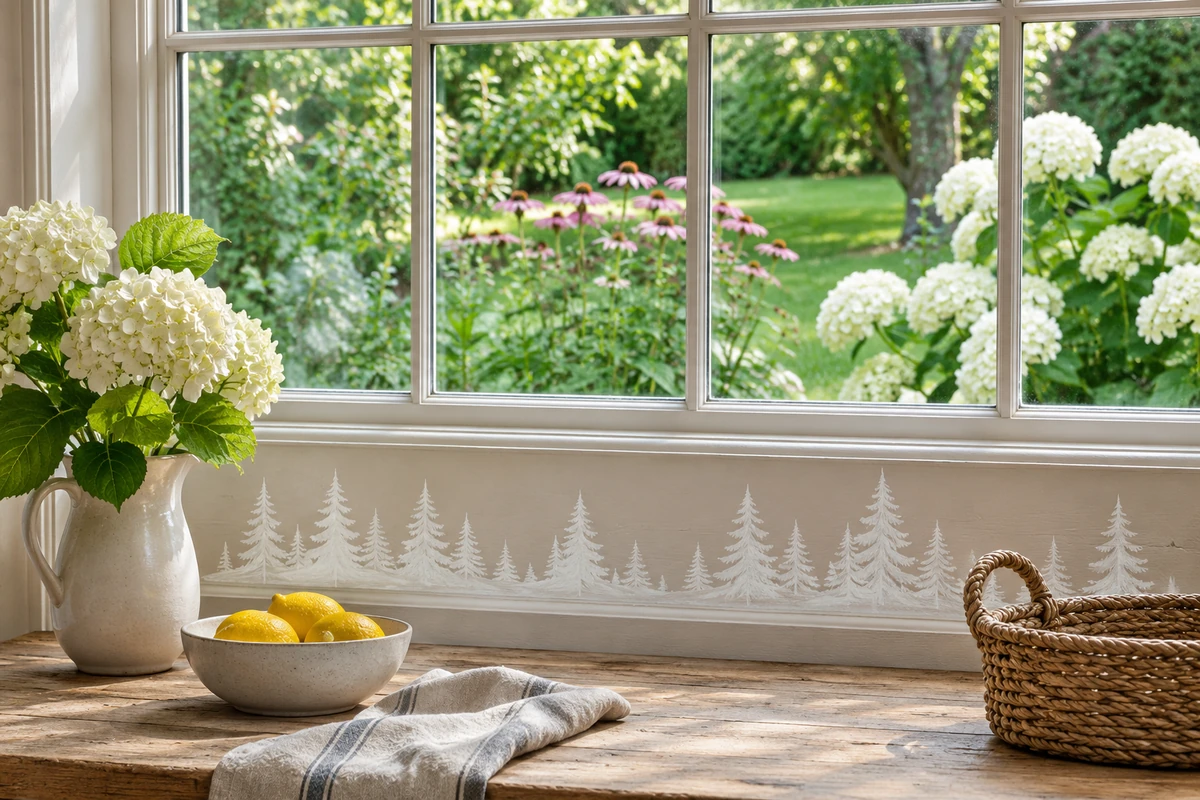
The best winter window painting ideas for a picture window use a low motif and preserve a band of clear glass at eye level. Try a few pines along the sill, put the tallest tree near one side, and check the scene from both standing and seated positions.
Give each tree a different outline if the background is already busy. One full tree beside a narrow, open one is easier to see than a row of identical triangles. Keep the snow line thin beneath them so the picture stays light.
For a corner window, bring a small tree onto the adjacent pane only if you can see the two panes together. Leave an actual gap at the corner. That lets the frame separate the scenes and makes the return pane feel intentional.
3. Scatter Snowfall Dots Across One Side
A light scattering of snow suits glass that already has an interesting view. Group a few dots near one corner and let the spacing grow wider toward the center.
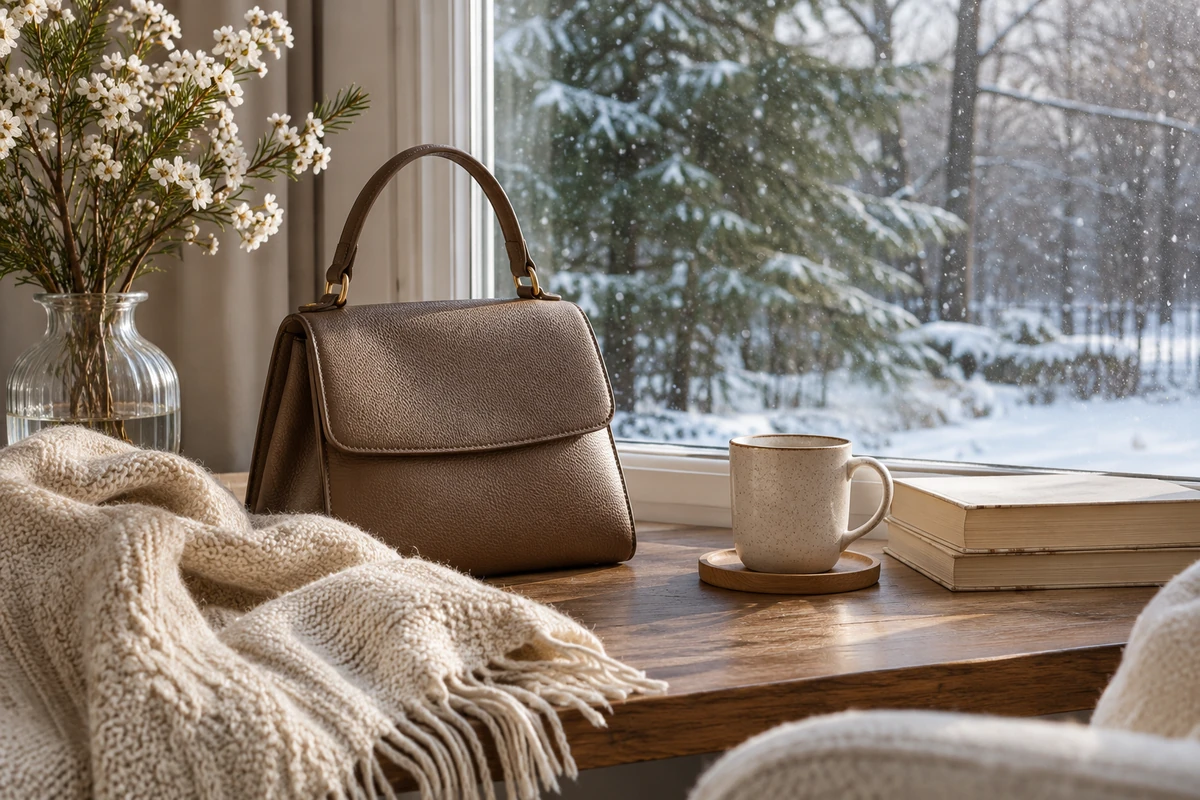
Use two or three dot sizes. The largest marks establish where the snowfall is heaviest, while the smaller ones suggest it’s continuing farther away. Start with only a few dots and see how they show against a garden, wall, or curtain before adding more.
Places To Try A Snowfall Pattern
- Along the upper corner of a wide window where the view is low.
- Beside a door pane where you want a small winter accent.
- Near an existing painted tree line if the scene has room for it.
- On one half of a divided window, with the opposite pane open.
Dots are easy to add and harder to judge once they cover the whole pane. Step back while there’s still an open center. If you want the scene to feel calmer after Christmas, this is a good place to stop.
4. Place Woodland Animals Near The Sill
A rabbit and a fox can give a winter window a small scene without needing trees, mountains, or detailed lettering. Place the figures low and turn them toward an open patch of glass.
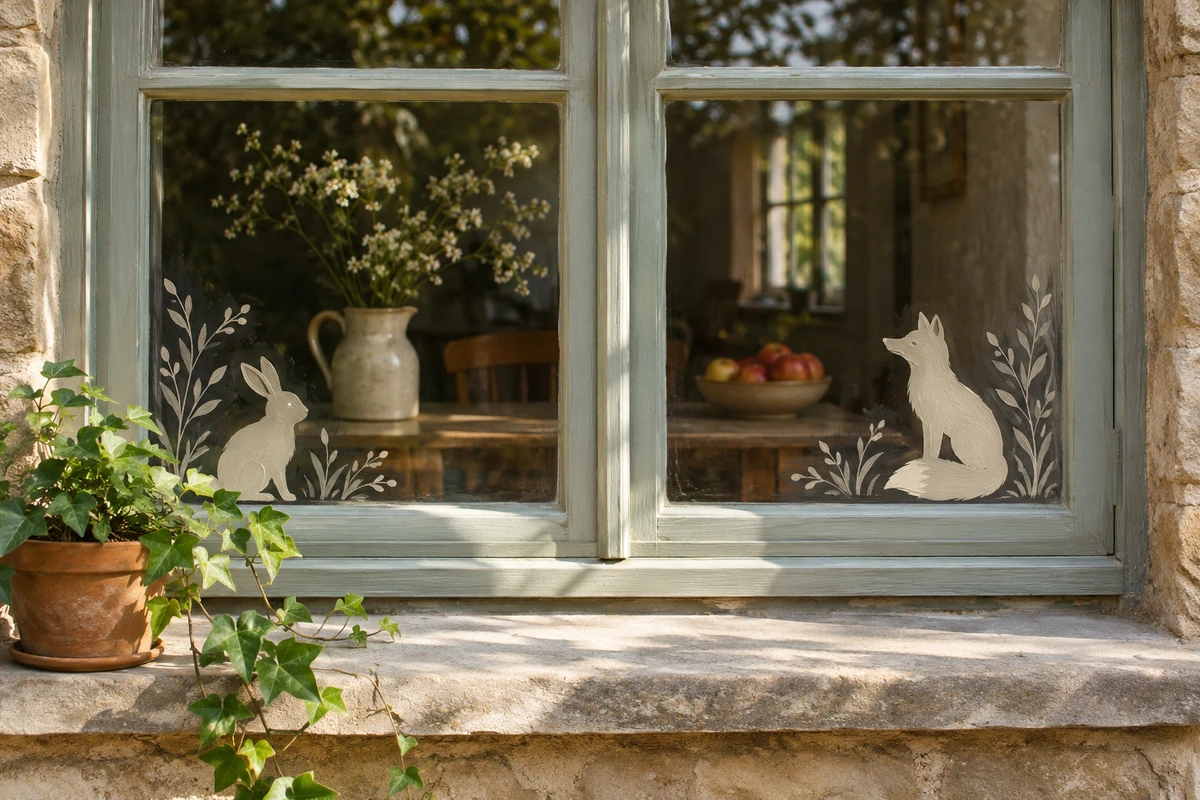
The outline matters more than fur or facial detail. Long ears distinguish a rabbit, while a broad tail helps a fox read from across the room. If the pane is narrow, choose one animal and add a short mark that suggests a snowy ground line.
Use cream or gray for a lighter figure and charcoal for a stronger silhouette. See how those colors look against the outdoor background before painting the whole shape. At night, indoor light may change the contrast from outside.
If the design will be seen both ways, check both views while you still have room to adjust it.
5. Paint A Few Snowy Cottage Silhouettes
A group of white cottages along the bottom of the glass can stay up after December. Give the roofs different heights and leave each building enough room to read on its own.
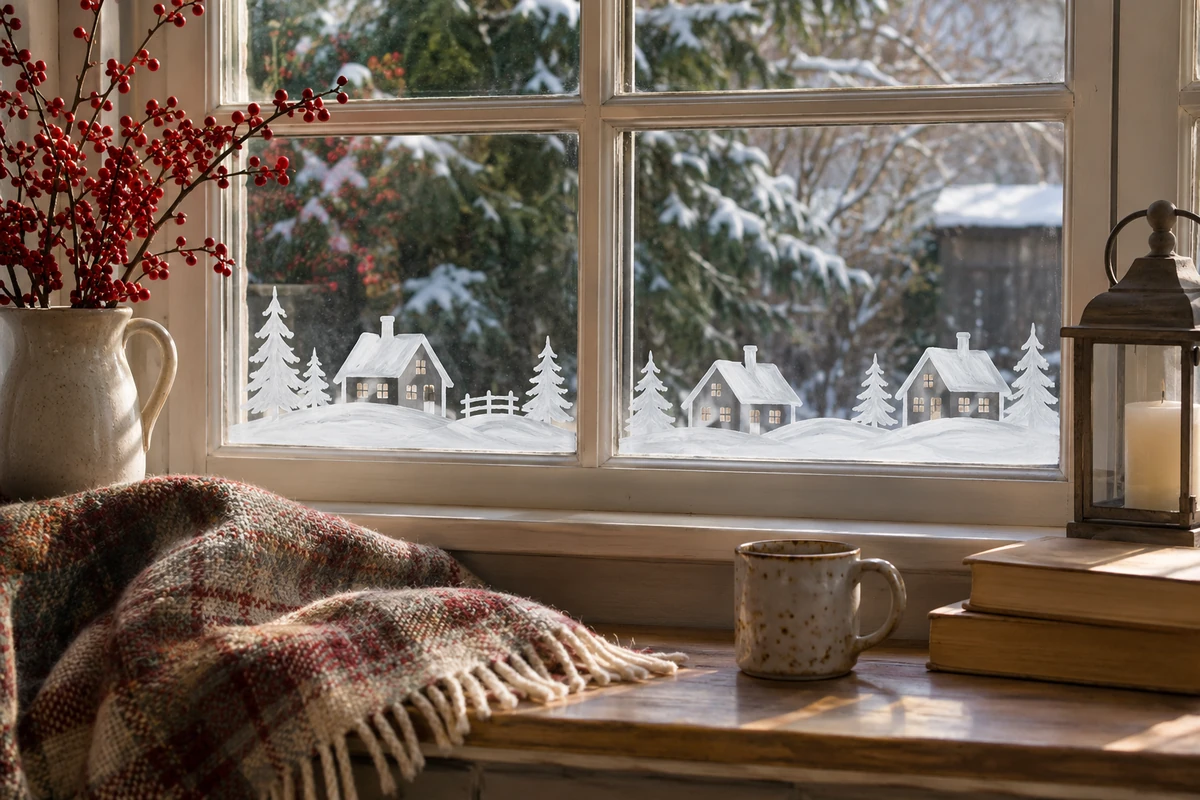
A winter cottage window painting works well when it uses simple rooflines, a little snow, and a clear gap between houses. Keep wreaths, colored ornaments, and other Christmas details out of the scene if you want it to feel at home after the rest of the decorations come down.
Try one tall gable, one low cottage, and one small outbuilding. A single light-colored doorway or window detail helps break up a larger shape. Leave some space between the group and the edge of the glass so the scene has a clear beginning and end.
On a divided window, use one pane for the whole cluster or one building per pane. If the painted snow line would need to cross several dividers, use a separate little snow mark under each building instead.
6. Put A Winter Moon And Stars Near The Top
A crescent moon and a few small stars suit a high corner or the upper edge of a wide pane. Keep the rest of the glass quiet so the small cluster stands out.
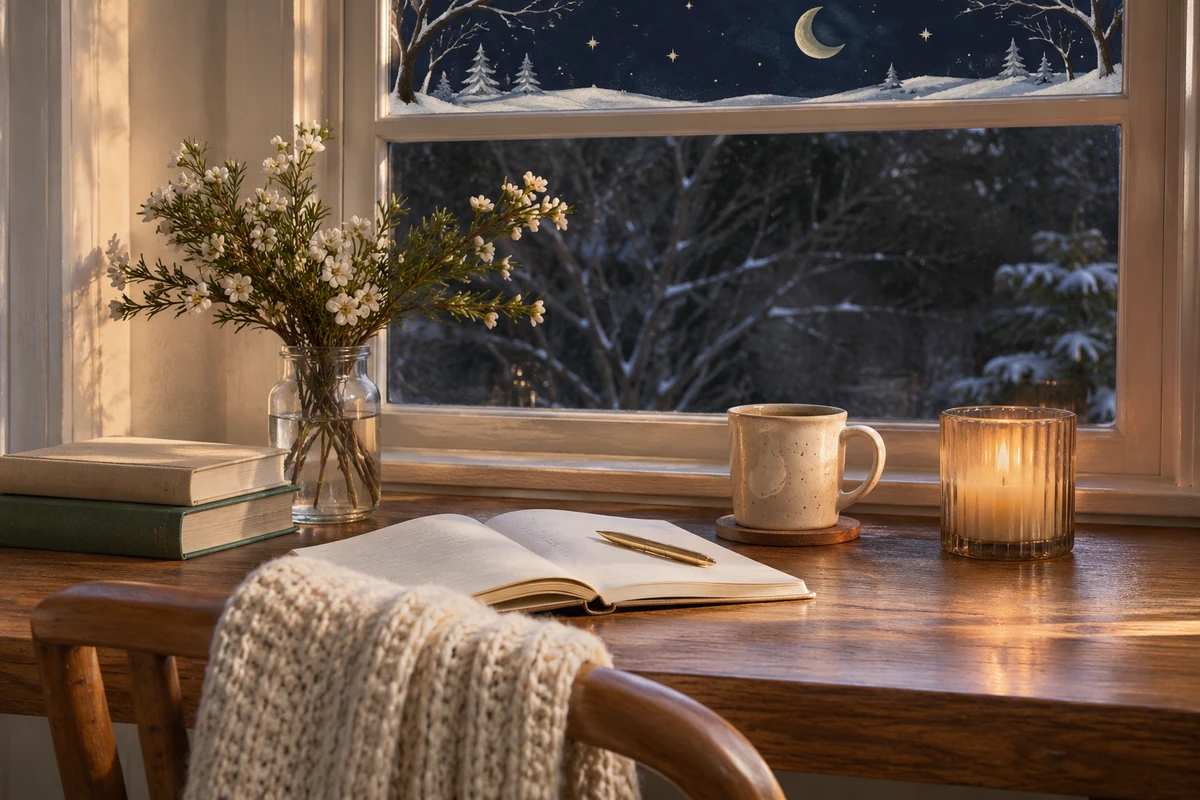
Place the moon a little away from the frame to keep its curve visible. Add stars where they balance it and stop before the pattern begins to look like a border. If the glass is bright in the morning, look again in the evening before making the stars larger.
Choose this design for a room where you spend time after dark. A moon above the level of the usual view can give the window a winter detail without covering the part of the glass you use.
If a blind normally comes down over the top, bring the design lower or move it to a pane without a covering.
How To Choose A Design For January
Look at the window after you’ve put the holiday decorations away. If it still has a strong view, choose frost ferns or a few dots. If it faces a plain wall or fence, a pine or cottage silhouette can add more interest.
Keep the color palette narrow. White and gray suit frost, trees, and small snow scenes. One warm shade can help a cottage or animal stand out.
For a display you’ll see from the street, prioritize the size and outline of the motif before deciding whether it needs color.
If you’re new to working on glass, start with a test patch and check the removal directions. Choose a small spot that’s easy to reach and test the product there before drawing the full design. The same surface test matters in January even when you change the design.
If this is your first time drawing on glass, start with the easy window painting tutorial. For a December display, browse these Christmas window painting motifs.
Frequently Asked Questions
Pick a design that fits the pane and looks right after the Christmas colors come down. Check these details before drawing.
What can I paint on windows after Christmas?
Try frost ferns, a low pine forest, woodland animals, or a winter moon. These look seasonal without needing holiday ornaments. Choose the smallest motif that suits the glass if you want to keep a clear view.
Which winter designs suit a narrow pane?
A single fern or woodland silhouette works well when the glass is tall and narrow. Keep the design to one edge or corner. Leave enough space on the other side for the outline to remain easy to see.
How do I make white window art easier to see?
Place the boldest parts where the background is darker, and make the main lines thicker than the small details. Check from your usual viewing distance. A branch that disappears against the sky may stand out lower on the pane.
Can I combine a few winter motifs?
Yes. A pine scene can sit below a few sparse dots, and a fox can share a pane with a small snow line. Give one motif the most space so the pieces feel related without covering the whole view.
How long should I leave the design up?
Use the marker and glass care instructions to decide. Try a small design first, check how it cleans away, and remove it when it starts to feel in the way of your view or normal window cleaning.
Final Thoughts
Choose winter window painting ideas by looking through the pane on an ordinary morning. A low line of pines can frame a view you want to keep. A few frost branches can make a narrow window feel finished.
Give the design room to sit on its own and see how it looks after the brighter holiday decorations go away. If you still enjoy it while the daylight is short and the room has returned to its usual colors, it’s doing enough to stay.