DIY Thanksgiving Centerpieces Using Natural Materials
A centerpiece becomes difficult when it looks lovely before dinner and gets in everyone’s way once the food arrives. I like DIY Thanksgiving centerpieces that can be lifted, divided, or simplified without undoing the whole table. A shallow bowl, a few pumpkins, and the right natural texture can do more useful work than a large arrangement that needs constant attention.
The five ideas below use fruit, pinecones, flowers, wheat, and small branches. Each includes materials, an assembly order, and a clear reason to choose it. You can use what you already own, keep the display modest, and still give the table a warm autumn feeling.
Plan Your DIY Thanksgiving Centerpieces Around The Meal
Start with the serving dishes and place settings, then decide how much room remains for a centerpiece. A natural arrangement should support the meal, keep faces visible across the table, and leave enough space for people to pass bowls comfortably.
- Put the largest empty serving platter on the table.
- Add water glasses and anything else that will stay out during dinner.
- Check what space remains. Use a smaller base or move the centerpiece if it crowds a serving dish.
Decide where the arrangement will go if you move it. A sideboard with a clear landing spot makes a tray useful. Without that spot, a movable centerpiece can become one more thing you are carrying around while guests sit down.
Gather The Useful Materials First
Choose one container, one main material, and one supporting texture before adding extras. For example, pumpkins can be the main material and pinecones the supporting texture. You do not need fruit, flowers, wheat, leaves, and branches in every arrangement.
- A shallow bowl, sturdy tray, small jug, or clean glass bottles.
- Sound miniature pumpkins, squash, or whole seasonal fruit.
- Clean, dry pinecones, leaves, or known plant material.
- A washable cloth, protective saucer, and a container for trimmings.
- Suitable scissors or floral snips for stems, used according to their instructions.
- Optional plain twine for a small bundle of dried wheat.
Look through cupboards before buying a special vessel. A serving bowl can become a centerpiece for the afternoon and return to everyday use afterward. Avoid using a treasured porous container for damp material unless a waterproof insert protects it.
Keep Natural Materials Separate From Food
Use a dedicated decorative container for gathered materials. Shake off loose debris outside and inspect everything before bringing it near the dining table. Skip anything damp, moldy, heavily shedding, insect-damaged, or of uncertain identity. Gathering a handful of fallen leaves is different from cutting a living tree or collecting inside a protected area; check permission and local rules first.
Do not bake pinecones as a casual cleaning shortcut for this project. You can use clean, dry craft pinecones instead, or leave them out entirely. Do not add unidentified berries or mushrooms because their color looks attractive. Keep small decorative pieces out of the reach of children and pets.
If you hope to eat the fruit later, keep it whole and separate from floral chemicals, glue, paint, and dirty foraged material. Fruit used as a craft supply should not automatically return to the fruit bowl. I prefer an undecorated tray of clean whole fruit when avoiding waste is the main goal.
Five Natural Thanksgiving Centerpiece Ideas To Make
Choose one of these five arrangements according to your table, available materials, and tolerance for upkeep. Each can stand on its own. Mixing all five across a single table would add work and take away the simplicity that makes them useful.
1. A Movable Pumpkin and Fruit Tray
A tray of small pumpkins and whole fruit is the easiest option when you want a generous harvest look without flower arranging. Its main advantage is the base: the entire display can move to a sideboard before serving, with no loose pieces left behind.
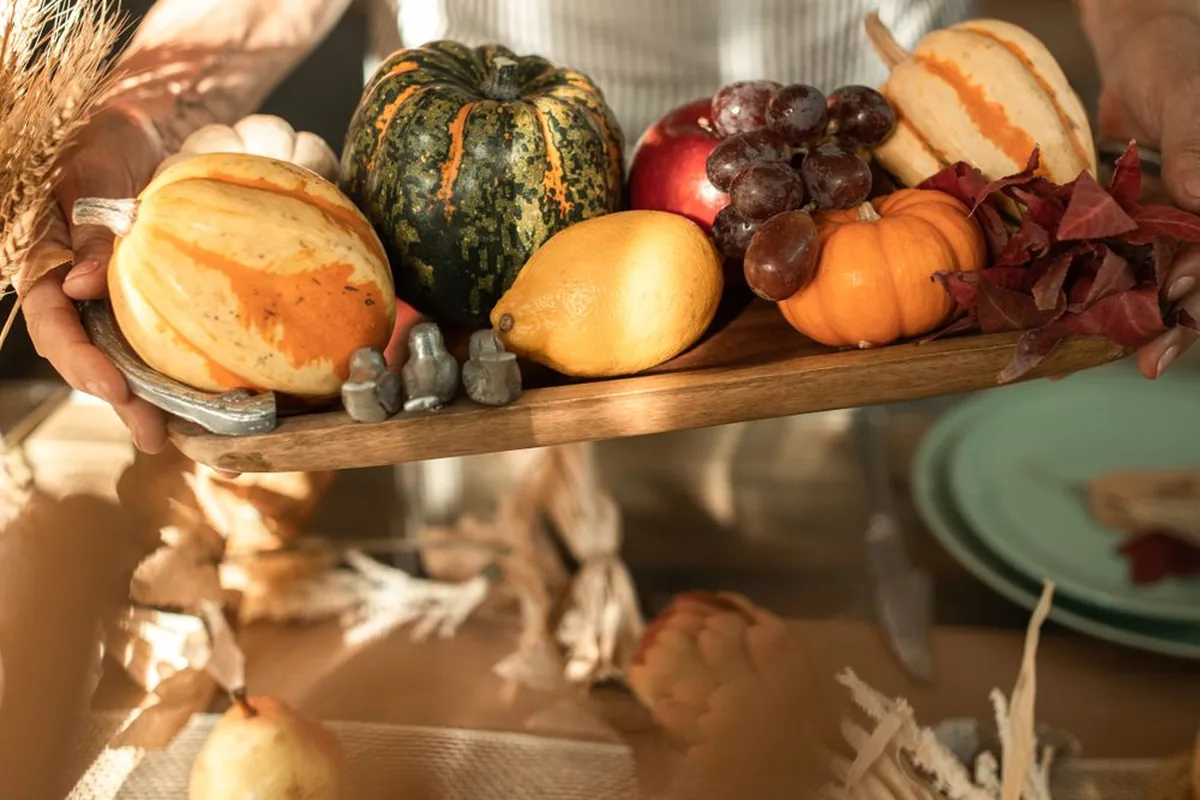
Materials: A sturdy shallow tray, a few small pumpkins or gourds, clean whole pears or apples, and a small amount of dry decorative foliage if wanted. Use the size of your tray to decide the quantity rather than buying a fixed number.
- Wipe the tray and check that its underside will not scratch your table.
- Place the largest pumpkin off center so the display does not look like a rigid row.
- Set the fruit into the remaining space in a single stable layer.
- Add smaller pumpkins where they will not roll or push fruit against the edge.
- Leave the handles clear and lift the tray once to check its balance.
Keep the tallest pieces away from the middle of your seated sightline. A pumpkin that looks small on a kitchen counter can feel surprisingly bulky between two dinner plates. Sit down on both sides before deciding that the arrangement is finished.
Skip piled grapes or very ripe fruit if the tray will be moved repeatedly. A few firmer whole pieces make the display easier to carry. If you want to use fruit afterward, omit gathered leaves from direct contact with it and avoid any decorative treatment.
Choose this when: You serve dinner family style and need the center clear once everyone sits down. It also suits a buffet where the arrangement can stay put throughout the meal.
2. A Shallow Pinecone and Pumpkin Bowl
A pinecone bowl brings rough woodland texture to the table without water, tall stems, or a complicated support system. Keep the arrangement in a shallow container so the pinecones and pumpkins read as a small grouping rather than a large mound.
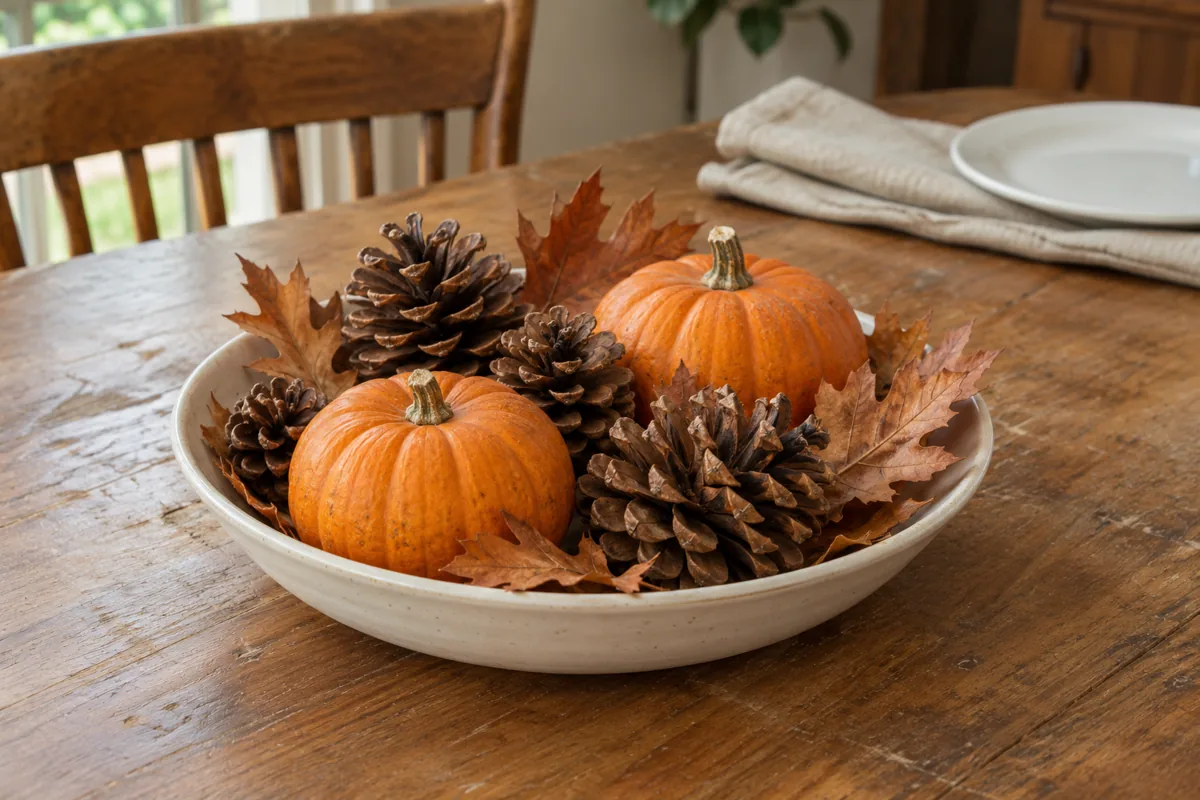
Materials: A low ceramic bowl, clean dry pinecones, two small pumpkins if your bowl allows, and a few dry leaves. The leaves are optional; the contrast between pumpkin skins and pinecone scales is enough on its own.
- Place the empty bowl on its protective base before filling it.
- Set the pumpkins inside first and make sure they rest securely.
- Lay the larger pinecones in the open spaces around them.
- Tuck smaller cones into gaps without stacking them above the rim.
- Add only enough leaves to soften the edges, keeping them contained.
The bowl should remain easy to pick up with both hands. If you must hold the contents in place to move it, remove some material. Leave part of the ceramic surface visible and keep loose pieces within the display.
Use flameless lights if you want a glow nearby. Do not nest a burning candle among pinecones, dry leaves, wheat, or twine. The U.S. Fire Administration advises keeping lit candles at least 12 inches from anything that burns and using stable holders. A small natural bowl usually gives you no useful clearance for a flame inside it.
Choose this when: You want a dry arrangement with little daily attention. It is a practical alternative to a floral centerpiece, especially if you already have a low bowl and suitable cones.
3. Small Flower Vases Instead of One Large Bouquet
Several small vases let you use a modest amount of flowers and adjust the arrangement around serving dishes. The important detail is stem height. Short, stable arrangements feel different from a tall bouquet divided among several narrow bottles.
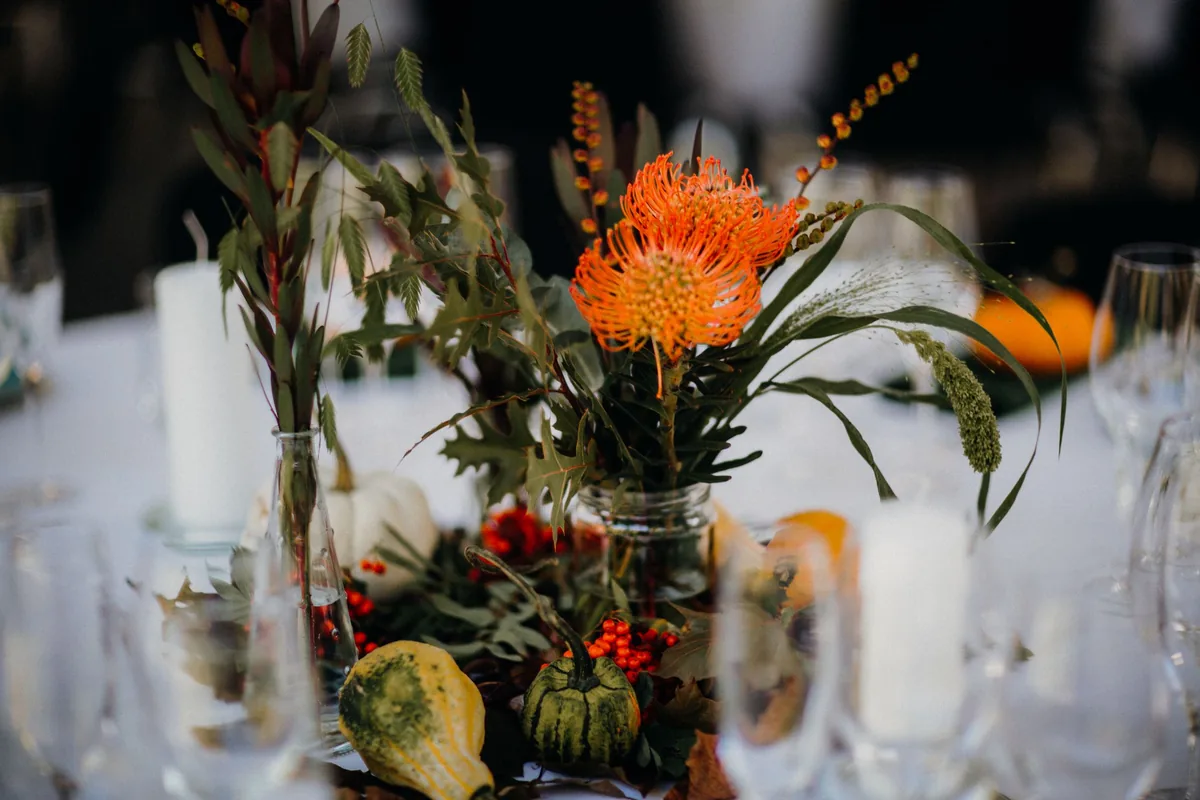
Materials: A few clean, stable jars or bud vases, water, a small selection of seasonal flowers, and limited foliage. Use vessels with bases wide enough that they do not tip easily when the table is touched.
- Fill the vessels with water where spills are easy to wipe up.
- Select the flowers you want to repeat across the table.
- Trim the stems gradually, checking the height against the actual vase.
- Remove any leaves that would sit below the waterline.
- Add stems loosely and check the view from a seated position.
You can use the photograph as inspiration for color and mixed glassware, then shorten the stems further for your own table. A stock photograph is not a measured construction plan. Your dinner plates, table width, and guests’ sightlines should decide the final size.
Place the vases between serving positions rather than spacing them evenly by eye. On a crowded table, one small vase may be enough. Save the remaining flowers for the entryway or kitchen instead of forcing every stem into the dining arrangement.
Avoid heavy fragrance close to food if anyone finds it distracting. If a household includes pets or children, confirm the suitability of the exact plant species before bringing it in. A familiar-looking leaf is not enough to identify a plant safely.
Choose this when: You want fresh color and need a layout that can change during the meal. Each vase can move separately, which is particularly useful on a long table.
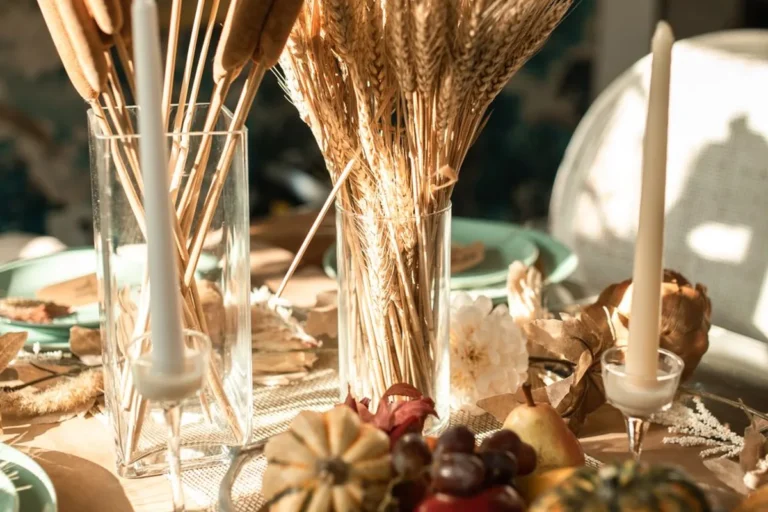
4. A Dried Wheat Jug For The Sideboard
A small jug of dried wheat adds a soft golden texture without a water-filled floral arrangement. Usually place it on a sideboard, serving station, or end table, where the stems can have some height without interrupting conversation across dinner.
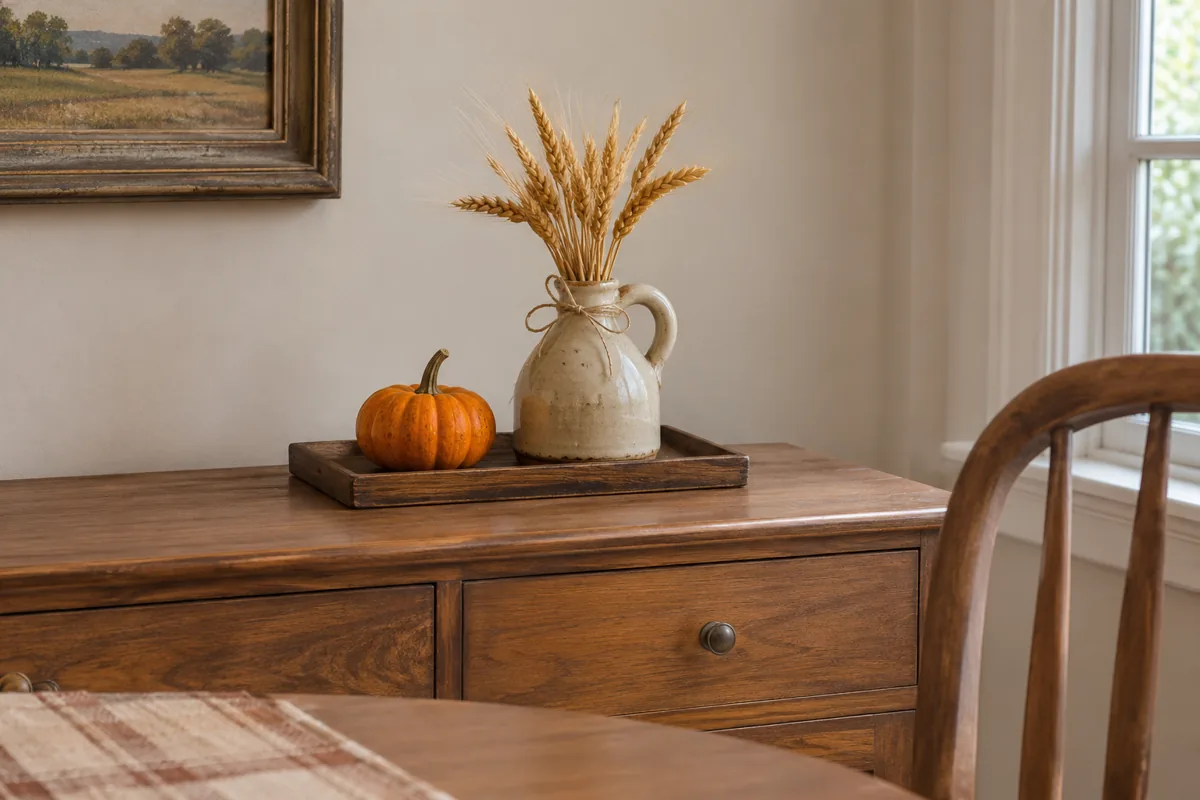
Materials: A heavy, stable jug, a modest bunch of dried wheat or similar purchased dried stems, plain twine if needed, a tray, and one small pumpkin. Choose dry material that is not shedding excessively.
- Test the empty jug on its tray and make sure it sits level.
- Compare the stems against the vessel before shortening them.
- Arrange the stems loosely so their outlines remain visible.
- Tie a small bundle only if it helps the stems sit together.
- Add the pumpkin beside the jug and leave the tray easy to lift.
The jug needs enough weight for the stems it holds. A narrow lightweight bottle with a large top-heavy bunch may look delicate, so place it away from a busy serving area. Reduce the bunch before trying to solve the problem with hidden supports.
Dried material still needs a sensible location. Keep it clear of heat, open flames, food preparation, and places where sleeves can catch it. If the wheat is dusty or a guest is sensitive to dried grasses, choose a pumpkin bowl instead. There is no need to keep a particular material just because it suits the color palette.
Choose this when: You want to prepare a dry display ahead of time or decorate a nearby surface while keeping the dining table almost clear. It also works as a separate seasonal accent after Thanksgiving.
5. White Pumpkins With One Small Branch Vase
A loose cluster of miniature white pumpkins and one compact vase gives a small table a clear focal point with few materials. The pumpkins provide weight and shape. A sparse branch adds a different texture without needing a full garland or large bouquet.
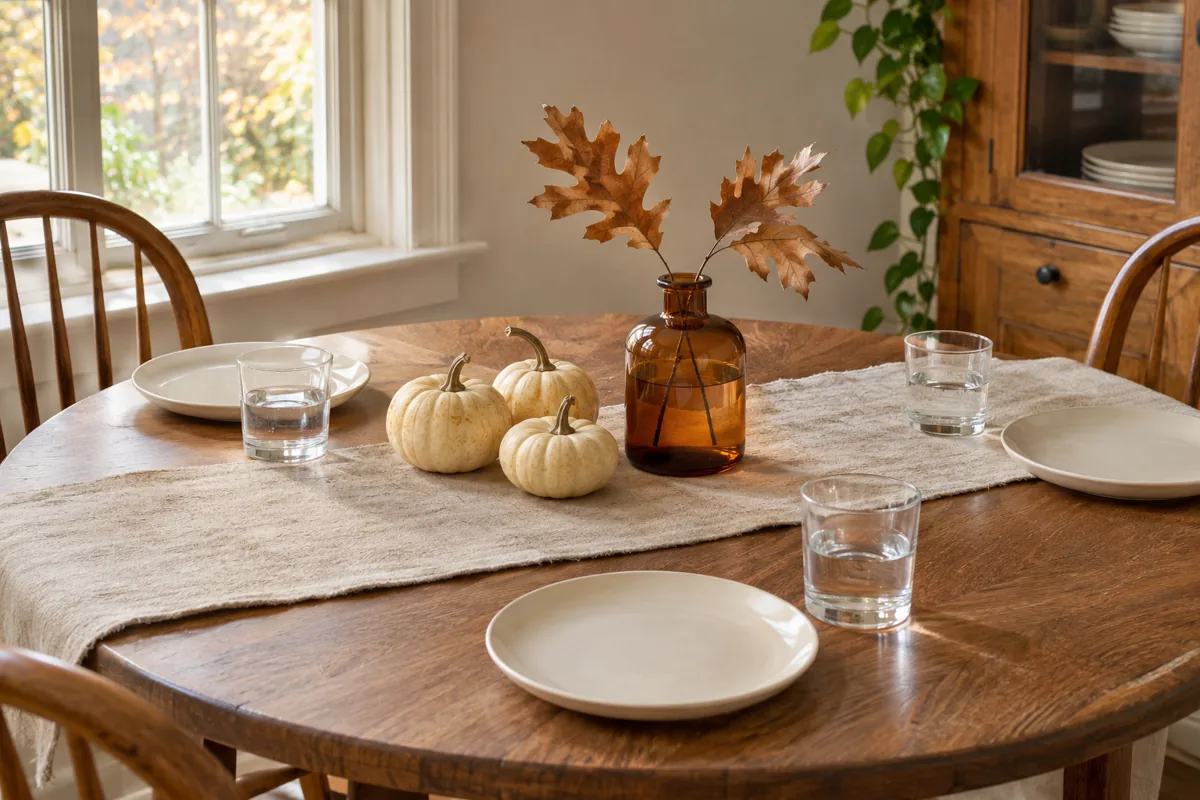
Materials: A few miniature pumpkins, a stable short vase or amber bottle, a narrow runner if wanted, and a small amount of suitable known foliage. Bought dried stems are a useful alternative when gathering is impractical.
- Lay the runner flat and place your dinner plates before arranging anything else.
- Group the pumpkins loosely, leaving their stems pointing away from sleeves.
- Add the bottle slightly to one side rather than directly between opposite faces.
- Insert a small amount of foliage and remove any awkward projecting stems.
- Test the space for glasses, a serving bowl, and someone’s forearms.
For a round table, keep the grouping compact enough to work from every seat. Do not assume that a decorative runner must reach across the whole surface. A folded length of linen under the arrangement may give you the same texture while leaving more usable space.
I like the restraint of this idea. Once the pumpkins and branch are in place, there is rarely a practical reason to add scattered nuts, individual leaves, place-card ornaments, and a second vase. Stop while the tabletop still looks ready for dinner.
Choose this when: You have a small round table, a quiet neutral setting, or little time for assembly. If the branch blocks conversation, move the bottle aside and leave the pumpkins as the centerpiece.
Choose The Arrangement That Fits Your Table
The most useful centerpiece is the one that fits the way you serve dinner. Compare the base, upkeep, and likely placement before buying supplies. A display that needs moving is perfectly workable when you have planned where it will land.
| Centerpiece | Best placement | Main advantage | Detail to check |
|---|---|---|---|
| Pumpkin and fruit tray | Dining table before serving or buffet | Moves as one unit | Tray balance and clear handles |
| Pinecone and pumpkin bowl | Center of a table with spare room | Dry, low arrangement | Loose debris and access for children or pets |
| Small flower vases | Between serving positions | Each vessel moves separately | Stem height, spills, and plant suitability |
| Dried wheat jug | Sideboard or nearby surface | Can be assembled ahead | Stability, shedding, and distance from heat |
| White pumpkins and branch vase | Compact round or small table | Uses few materials | Branch direction and seated sightlines |
My practical takeaway:Choose the tray for family-style serving, small vases for fresh flowers, and the shallow bowl for a water-free arrangement. The wheat jug makes the most sense away from the dining table.
For a narrow table, put the strongest decorative moment on a sideboard and keep only a small echo on the dining surface. One pumpkin or a single small vase can carry the same colors without repeating the full arrangement.
If you are planning the whole setting, my guide to simple Thanksgiving table setting ideas covers plates, napkins, and serving space. Decide those pieces together with your centerpiece so they share the available room.
Set Up Ahead and Make Cleanup Easier
Prepare dry containers and layout tests ahead of time, then check fresh materials close to the meal. There is no single safe shelf life for a natural centerpiece: the condition of the fruit, flowers, leaves, and room will determine what still looks usable.
Before The Holiday
Wash the reusable containers and choose a protective base. Try the arrangement with empty serving dishes, then take a quick reference photo for yourself. That photograph helps you rebuild a loose grouping without keeping it assembled in a busy kitchen.
Inspect natural materials before storing them. Keep dry pieces dry, store them where they will not be crushed, and leave the arrangement away from heat. Do not seal damp gathered material into a box and expect it to stay attractive.
On The Day
Check fruit and pumpkins for deterioration, refresh the flower arrangement as needed, and remove shedding leaves. Wipe any water from the outside of vases before returning them to the table. Give yourself one final seated check after the glasses and serving dishes are in place.
If you use real candles elsewhere, follow the candle maker’s instructions and the fire-safety guidance in the sources below. Never leave them burning unattended. A photograph containing candles is styling inspiration, not a reason to copy its spacing or surround a flame with dry decoration.
After Dinner
Separate the materials while clearing the table. Keep clean whole food apart from craft materials, wash the containers, and inspect dry decorations before deciding what to save. Follow your local composting guidance for untreated plant material rather than assuming every painted, wired, or preserved decoration belongs in the compost.
The easiest DIY Thanksgiving centerpieces to reuse are usually assembled without permanent glue. A bowl can return to the cupboard, a tray can carry breakfast, and the arrangement can change as individual pieces fade. That flexibility matters more to me than making every item last until the next holiday.
Frequently Asked Questions (FAQs)
What Is the Easiest DIY Thanksgiving Centerpiece?
A shallow bowl of small pumpkins or a tray of clean whole fruit is a straightforward starting point. You do not need floral supports or a complicated craft technique. Check that the container is stable, the pieces cannot roll away, and the arrangement leaves space for serving.
How Can I Make a Centerpiece Without Buying New Decorations?
Start with a bowl, tray, or jug you already use. Add sound seasonal produce or suitable dry materials you already have. Keep the display small enough that one main material feels intentional. Buying several fillers to make a larger arrangement can defeat the purpose of using what is available.
Can I Make a Natural Centerpiece the Day Before?
You can prepare containers, test the layout, and assemble suitable dry pieces ahead. Fresh flowers and produce need another condition check before dinner. Avoid a fixed promise that every natural material will last overnight; warmth, moisture, and its starting condition all affect how it holds up.
How Tall Should a Thanksgiving Centerpiece Be?
Keep it low enough that people can see one another comfortably from their seats. Test this at your actual table rather than relying on a universal height. A sparse branch can still interrupt a face or catch a sleeve, even when much of the arrangement is low.
Can I Put Candles in a Pinecone Centerpiece?
Use a flameless candle if you want light near pinecones or dried leaves. A burning candle needs clearance from combustible materials and a stable holder. Do not tuck a flame into the bowl or assume a glass sleeve makes close-packed dry decorations safe.
Final Thoughts
Make one small centerpiece that can stay in place throughout dinner. The container, the serving space, and the condition of the materials do most of the practical work. Color comes afterward.
For DIY Thanksgiving centerpieces, start with the easiest arrangement your supplies support. Leave room around it, check it from a seated position, and choose a clear landing spot if it needs moving. A few natural textures can make the table feel seasonal without turning holiday preparation into another large project.
Sources and Image Credits
The following sources support the natural-material and candle-safety guidance. Decorative quantities and layouts in this article are practical suggestions to adapt to your own table.
- U.S. Fire Administration: Candle Fire Safety.
- Chicago Botanic Garden: Plant Materials for Holiday Decor.
Stock photography: Rene Terp on Pexels and RDNE Stock project on Pexels. The pinecone bowl, wheat jug, and white-pumpkin branch arrangement are AI-generated visual examples.
One Comment