Simple Thanksgiving Table Setting Ideas For A Warm, Welcoming Dinner
Set an empty serving dish on the Thanksgiving table first. It quickly shows how much room is left for the details that make dinner feel special. My favorite simple Thanksgiving table setting ideas begin with that practical check, then add soft linens, useful place settings, and a little autumn color.
You can create a welcoming table with everyday plates and a few seasonal pieces. The trick is choosing details that still work once people sit down and the food arrives. Below, I share five table-setting looks, ways to adapt them for a small dining area, and a setup checklist that keeps the last few jobs manageable.
Choose Simple Thanksgiving Table Setting Ideas Around Your Meal
Start with the number of guests, the dishes you will serve, and where the food will sit. Then choose a linen base and a small group of colors. This gives your Thanksgiving table a clear direction before you add decorations or buy anything new.
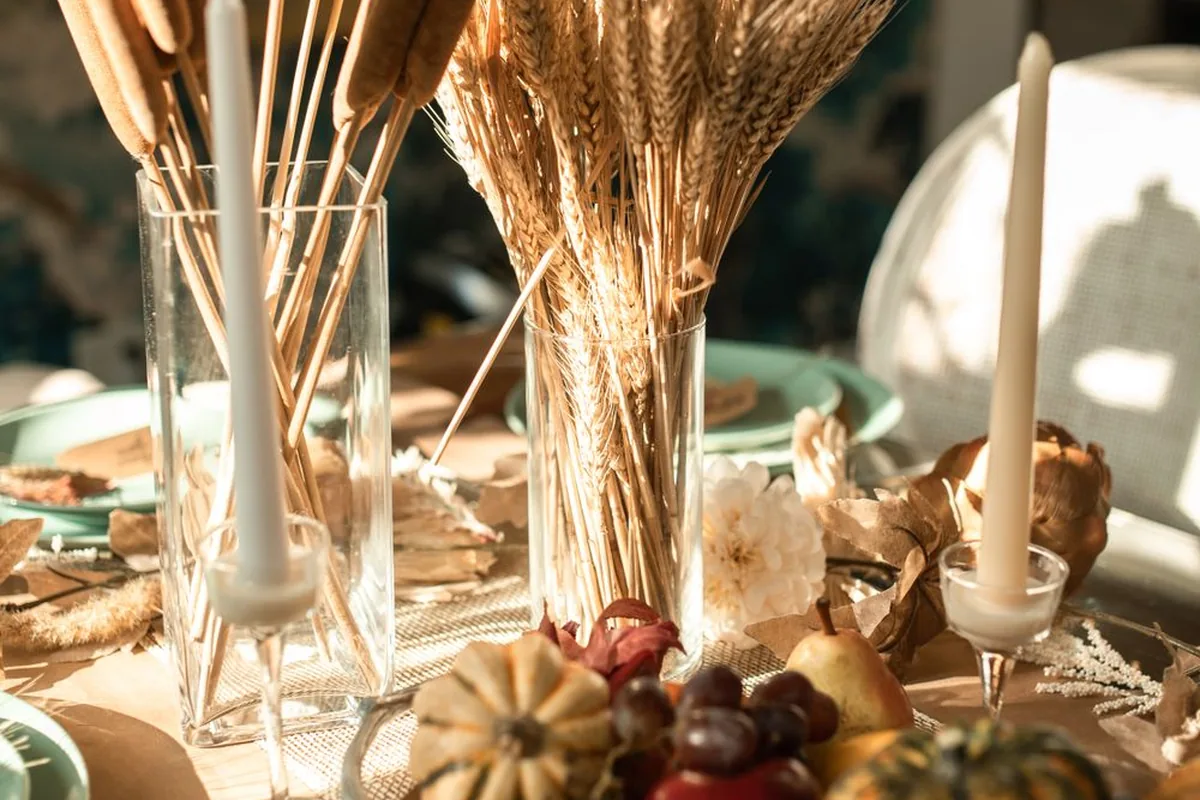
Try One Complete Place Before Repeating It
- Set out a dinner plate, the utensils you’ll need, a napkin, and a water glass at one chair.
- Pull the chair in and sit down.
- Check that you can move your elbows comfortably and reach the glass without brushing the centerpiece.
Next, put your empty serving bowls and platters in their proposed positions. This is a layout test, so the food can wait. If a bowl already overlaps a plate, moving a pumpkin will help more than finding a smaller napkin ring.
Choose a serving arrangement before you decorate:
- Family-style dinner needs room for shared dishes and their serving utensils between the place settings.
- A sideboard buffet moves the large platters away from the dining table but needs a clear route for guests.
- Plated service leaves more room for a centerpiece, although you still need somewhere to set a jug or extra bread.
A narrow table can look lovely with just napkins and a modest central accent. A wide table may comfortably hold more layers. Let the empty serving dishes show you which situation you have.
Pick A Base You Can Use Again
A tablecloth changes most of the visible surface, a runner emphasizes the center, and placemats define individual places. You can combine them, but each extra layer should earn its space. I like a runner over a bare wooden table when the wood already adds warmth.
| Linen Base | Best For | What It Adds | What To Check |
|---|---|---|---|
| Tablecloth only | A mixed or folding-table setup | A consistent background across the whole surface | The edges should clear chair movement comfortably |
| Runner on a bare table | A table with a finish you want to show | A central strip of color or texture | Hot dishes still need suitable protection |
| Placemats only | A compact everyday table | A defined place for each guest | Neighboring mats should fit without overlap |
| Tablecloth and runner | A wider table with room for layers | Contrast between the base and center | The runner should not crowd glasses or serving dishes |
My takeaway: Choose the linen arrangement that fits the meal and the table you own. Matching every layer matters less than having a usable surface once the dishes arrive.
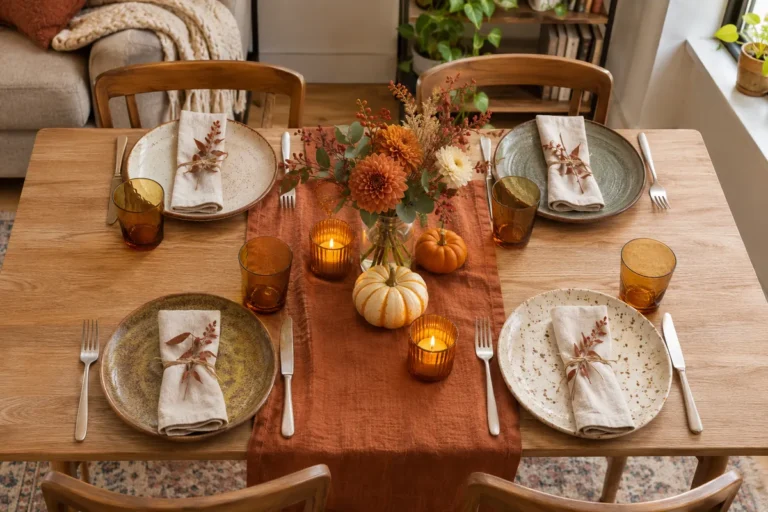
Idea 1: Pair Warm Napkins With Clear Glassware
Warm orange or rust napkins can make an otherwise familiar setting feel seasonal. Keep your existing plates and glasses, then repeat the napkin color around the table. This is an approachable Thanksgiving look when you want a noticeable change with a short shopping list.
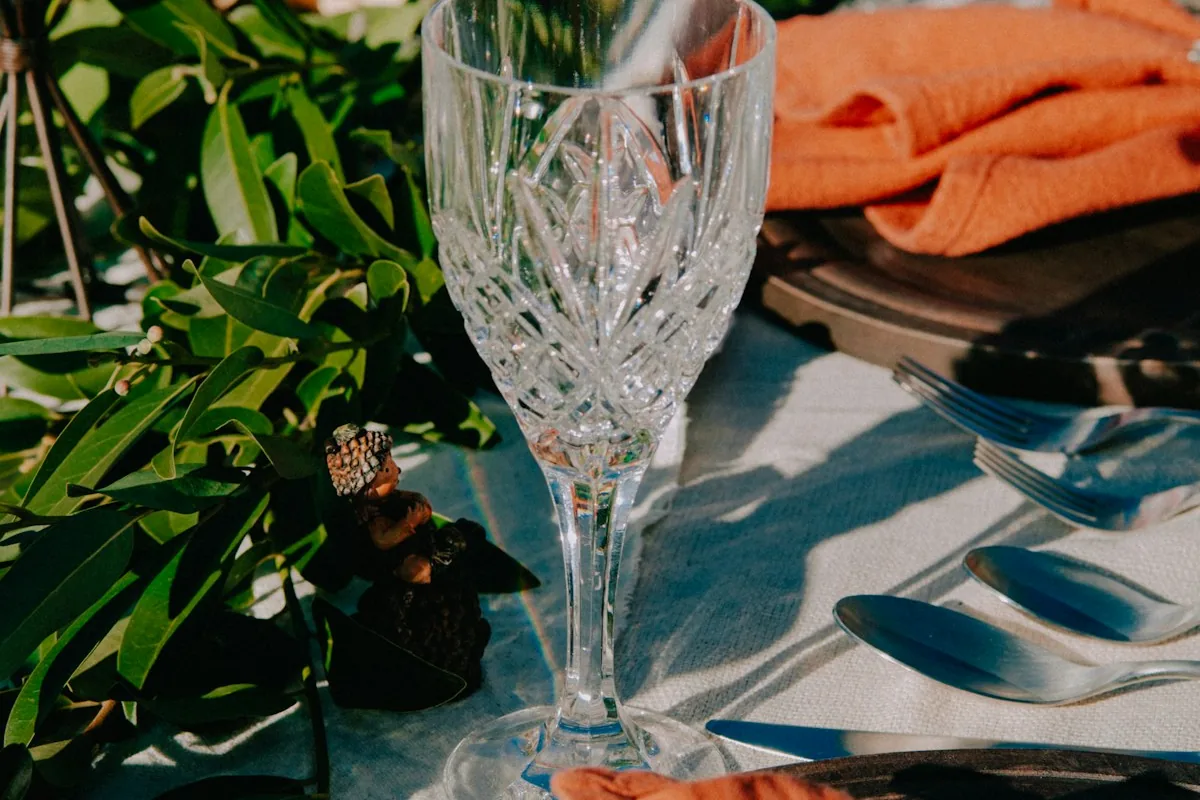
Let One Color Do Most of The Work
Start with a folded napkin against the plate and look at it in the light you will use for dinner. A muted terracotta may suit a cream tablecloth, while a deeper orange can stand out against patterned dishes. There is no need to match the shade exactly to every pumpkin or flower.
Use clear water glasses if that is what you already have. Their repeated shape helps the table feel connected without adding another strong color. Different glass shapes can also work, especially if you repeat the same napkin at each place.
- Fold the napkin into a long strip.
- Fold it into a rectangle that fits on the plate or alongside the fork.
- Check that a guest can pick it up and unfold it easily.
Keep the Layers Proportionate
A charger is optional. If the dinner plate already fills most of the placemat, leave the charger out and use the napkin for texture. If you have room for one, check the full setting with the chair occupied before repeating it.
Carry the warm color into one other detail, perhaps a small arrangement on a sideboard. Repeating it in the room can make the dining table feel considered without covering the center in objects.
This look also suits mixed tableware. Put the same napkin color against each plate, even if the plates have different rims. A repeated element gives the eye something steady to follow, while the differences keep the table relaxed.
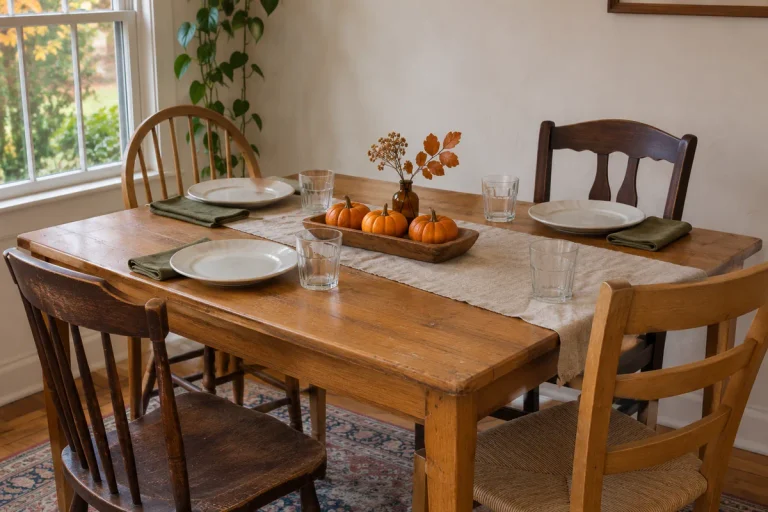
Idea 2: Use Green Plates and A Bare Wood Table
Soft green dishes, a visible wooden tabletop, and understated napkins create a gentle autumn setting. Keep the color scheme close to the tableware you own. A few seasonal accents can then connect the arrangement to Thanksgiving without requiring themed plates.
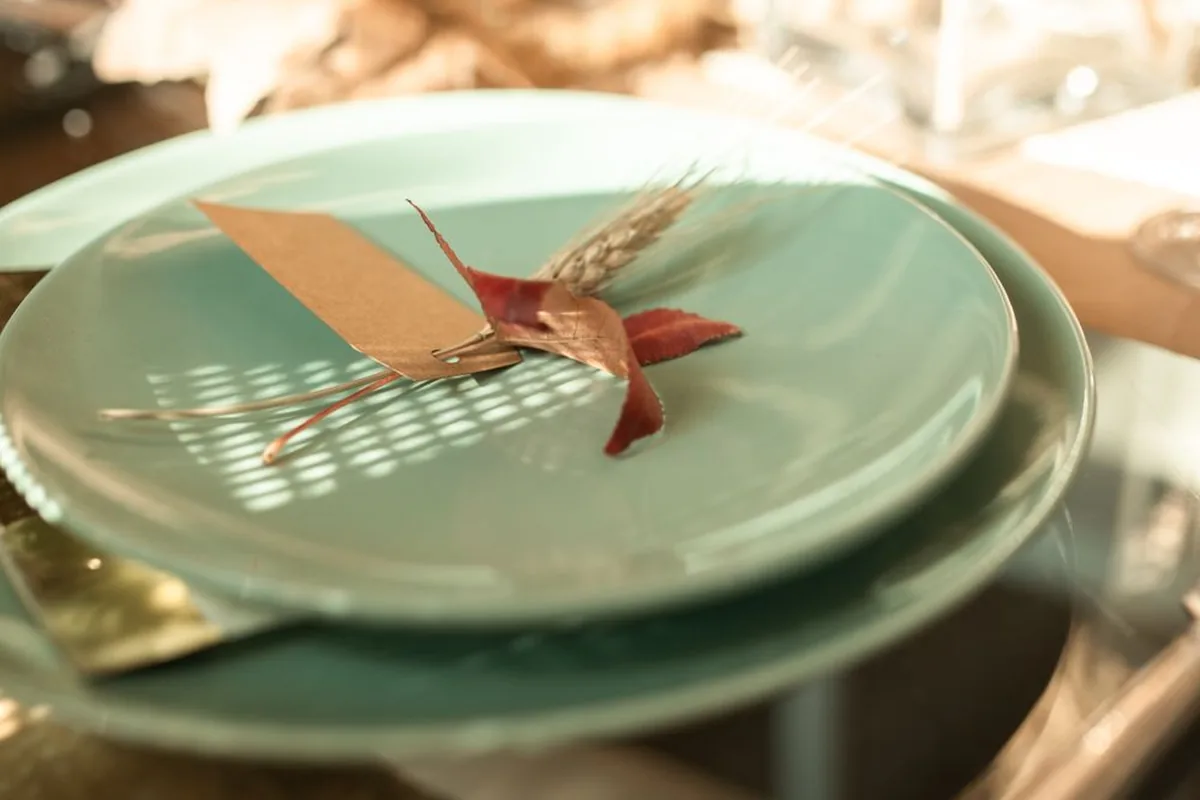
Build From The Plate Color
If you have green plates, try them with oatmeal, cream, or warm brown fabric. If your plates are white, you could bring the green into a napkin instead. The point is to use a color relationship you enjoy, rather than reproduce a photograph item for item.
A patterned plate can work here, too. Pull one quiet color from its design and repeat that in the cloth. Keep the remaining pieces fairly simple so the pattern has room to show.
Place the cutlery according to the meal you are serving. A basic arrangement puts the fork to the left of the plate and the knife to the right, with the blade facing inward. Add a spoon if the menu needs one, and put the water glass above the knife. Emily Post’s basic setting guidance is a useful reference if you want to check the arrangement.
Protect The Table Where It Needs Protection
A bare-table look still needs suitable mats or trivets beneath hot serving dishes. Choose those pieces before arranging the centerpiece. A small trivet discovered at the last moment can be difficult to fit between decorative objects.
Keep loose seasonal materials away from eating surfaces. Place a decorative leaf beside a name card or on a separate small dish, then remove it before the meal if it would interfere with the setting. You can achieve the same autumn color with a paper detail.
For me, this setting works best when there is visible space around the plates. If every gap is filled, the texture of the wood disappears and the arrangement becomes harder to use. Leave the useful gaps visible.
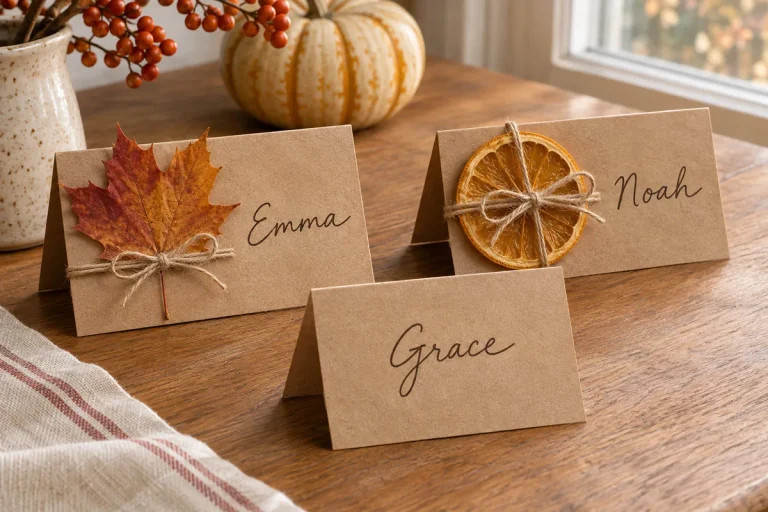
Idea 3: Add A Handwritten Thank-You Card
A small card on a plate adds a personal detail without taking permanent table space. Use it for a guest’s name, a short welcome, or a simple expression of thanks. Keep the design easy to move so the plate is ready when dinner begins.
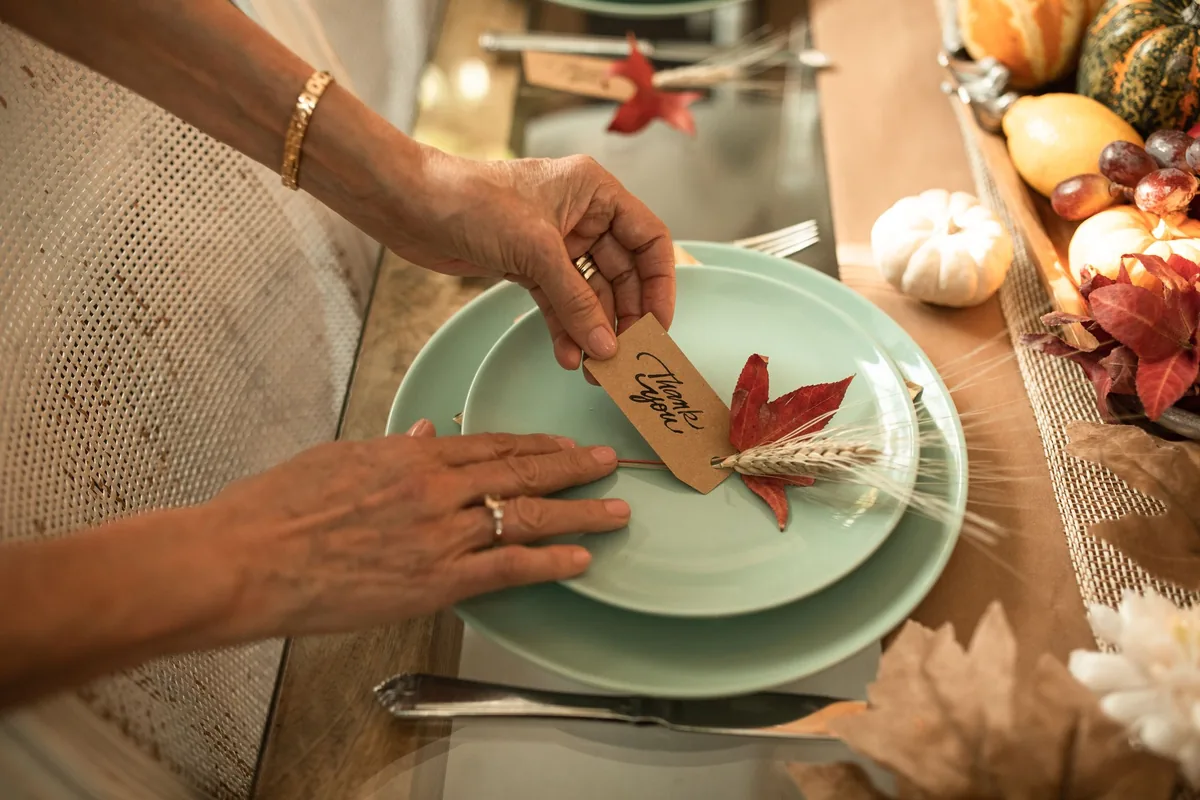
Make The Card Useful
If you need a seating plan, put a clearly written name on the front. If everyone can choose a seat, a short “Thank you for being here” message can work across the table. Choose one purpose and keep the text brief.
For a straightforward version, fold plain cardstock into a small tent and test that it stands on the tabletop. Write the name before repeating the shape for every guest. This gives you a chance to check that the card is large enough to read from the chair.
You could also lay a flat card on the napkin. That is useful when the table is narrow or the card will be moved before the meal. Leave a tray or shelf nearby where guests can put it rather than having it disappear beneath a hot plate.
Keep Decorative Extras Easy To Remove
A single paper leaf can provide the seasonal detail. If you use an actual leaf or other natural material, keep it clean, dry, and separate from food-contact surfaces. Avoid scattering small pieces around each setting, particularly where young children will be sitting.
There is no need to add a ribbon, sprig, ring, and miniature pumpkin to the same place. Try the card by itself first. If it already makes the setting feel welcoming, the job is finished.
For a gathering with children, use readable names and leave enough space for the tableware they will actually use. A place card should help someone find their seat. It does not need to become another item the host must explain during dinner.
Idea 4: Put Harvest Color On A Movable Tray
A tray of small pumpkins and seasonal fruit provides a central accent that can move as one piece. This is useful when the table changes from a decorated welcome to a shared meal. Test the loaded tray’s weight and carrying space before guests arrive.
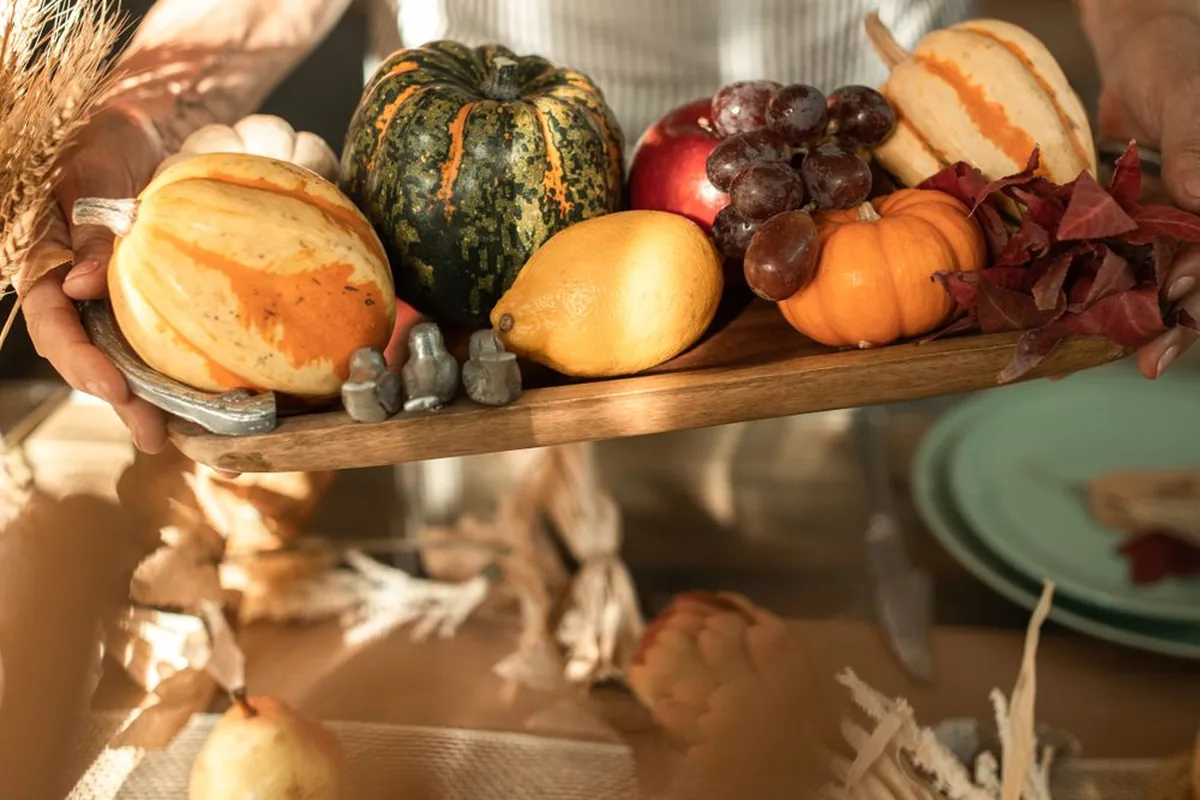
Start With The Container
Use a shallow tray or platter that sits steadily on the table. Place it where the decoration will go, then arrange the empty serving dishes around it. If the tray leaves too little room, choose a smaller container or give it a home on the sideboard.
Select a few pieces in related colors instead of filling every part of the tray. Orange and green pumpkins can bring enough variation by themselves. Fruit can add a softer shape, but keep any fruit intended for eating clean and separate from decorative materials.
Arrange the heavier pieces low and check that nothing rolls when the tray moves. Leave the handles or edges accessible. A centerpiece that looks portable but needs several objects removed first will be frustrating during service.
Give It A Destination
Decide where the tray will go during dinner. A clear sideboard or console works if it has enough space and is out of the main route through the room. Do not rely on finding a spare surface after hot dishes are already being passed.
For a round table, one compact tray can keep the arrangement centered. On a long table, a small tray near each end may be easier to remove than one long display. Try the arrangement from each chair and check that people can see one another.
This idea can also be the only seasonal decoration on the table. Everyday napkins and plates will still feel connected to the holiday when there is a clear harvest accent nearby. Keep the place settings quieter if the tray has several colors.
Idea 5: Add Autumn Flowers In Small Vases
Small vases bring autumn color to a Thanksgiving table while allowing you to adjust the arrangement around serving dishes. Choose a few stems with a pleasing shape and keep the display low enough for comfortable conversation. One arrangement can be enough on a small table.
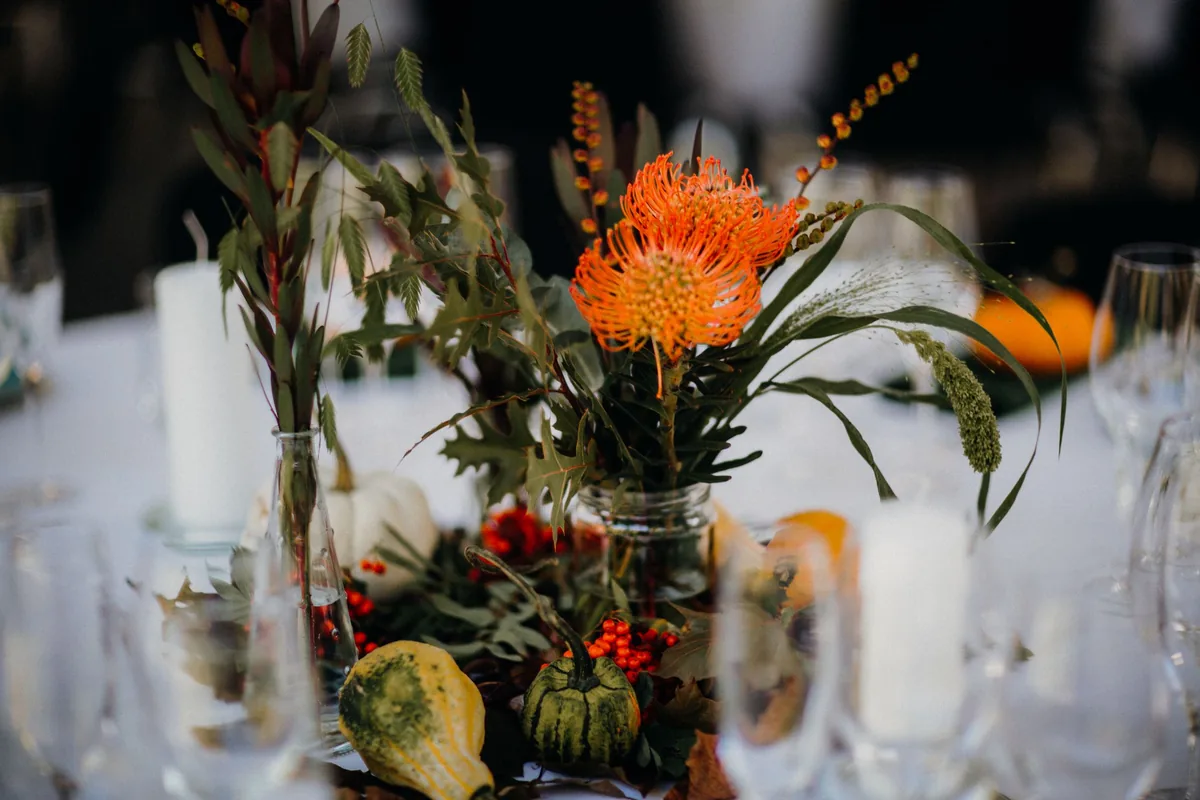
Arrange For The View From A Chair
Set the vase in place before adding all the flowers. Sit opposite it and check the line of sight. A low container can still produce a tall display if every stem points upward, so adjust the stems according to what you see from the seat.
A narrow-neck vase is useful for a few stems. A wider bowl may need more flowers to look intentional and can occupy more of the table. Choose the container before buying flowers, then take a photograph of it to help judge the amount you need.
For a warm palette, you might combine orange blooms with a quieter green stem. You can also use flowers that suit your existing dishes rather than searching only for traditional fall colors. Check plant suitability for the household if children or animals might reach the arrangement.
Separate Flowers and Flames
Choose flameless candles for a table that also contains flowers, paper cards, or dried seasonal details. They give you more flexibility about where the light sits, although the product still needs to be used according to its instructions.
If you use burning candles, the U.S. Fire Administration advises stable holders, at least 12 inches of separation from anything that can burn, and extinguishing them when you leave the room. If that clearance cannot be maintained as food and sleeves move around the table, change the lighting plan.
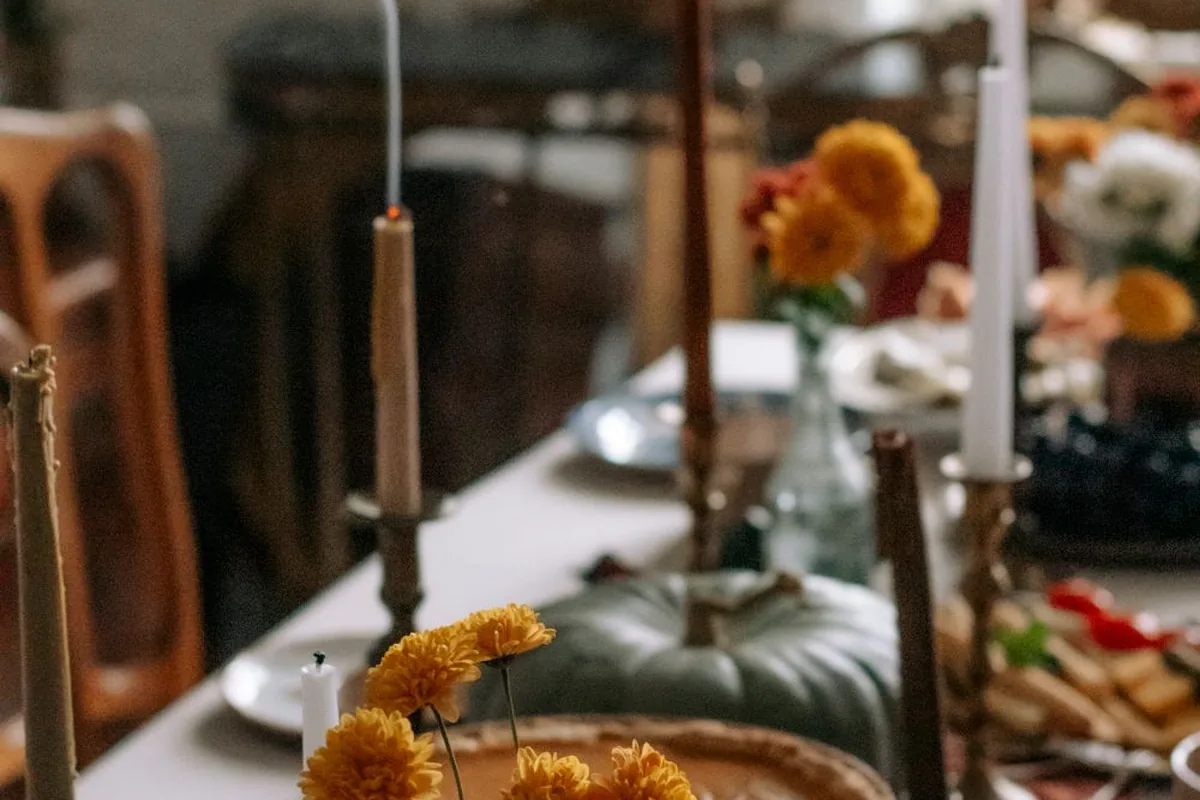
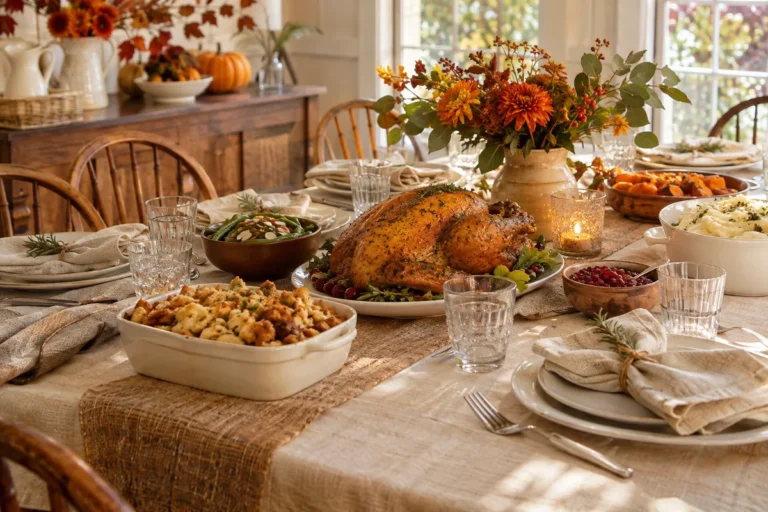
Photographs can show a decorative arrangement with more objects than you would want during dinner. Use the image for color and texture inspiration, then check the practical spacing in your own room. Candle and flower placement deserves that final check after all the tableware is present.
Adapt The Look For A Small Table and Finish The Setup
On a small Thanksgiving table, reduce the centerpiece first and set out only the tableware the meal needs. Move large serving dishes to another suitable surface if the room allows it. Then check the arrangement from an occupied chair, with glasses and serving utensils in place.
Keep The Idea, Reduce The Footprint
You can adapt any of these simple Thanksgiving table setting ideas without changing the whole look. Use the warm napkin and skip the charger. Keep the thank-you card and move the seasonal tray to a sideboard. Put one short vase near the end of the table instead of arranging several down the center.
Set out four place settings and one small accent for a four-person table. Add your empty serving bowls next. If the table already feels full, the rest of the seasonal styling can happen elsewhere in the room.
A buffet helps only if the route works. Check that people can carry a plate from the serving surface to their chair without moving someone else’s seat. Keep a drink station away from the narrowest part of that route when possible.
Prepare A Short Shopping List
Count what you have before shopping. A nearly complete set of glasses may need just one borrowed piece. A tablecloth that looks too short on the hanger may fit once you test it on the actual table.
Divide your list into essentials and optional additions:
- One suitable plate, napkin, water glass, and required utensil set for each guest.
- Serving utensils for the dishes on your menu.
- Appropriate protection beneath hot dishes and containers.
- A linen base if the table needs one.
- One seasonal detail from the ideas above.
- Extra decoration only after the layout test shows there is room.
Borrowing a serving platter can be more useful than buying several small ornaments. If you buy something, consider where it will be stored and whether you would use it for an ordinary dinner later.
Complete The Final Walk-Through
Set out the durable pieces in advance if the table can remain undisturbed. Add fresh elements when appropriate, then check the room in the light you expect to use for the meal. Keep clean dishes covered or stored until closer to dinner if the area is busy.
Before guests arrive, work through these checks:
- Sit in each type of chair and confirm that the place setting is comfortable to reach.
- Make sure napkins and cards lift away without disturbing the glasses.
- Put the empty serving dishes back into their planned spaces.
- Check that hot-dish protection and serving utensils are ready.
- Confirm that flowers allow conversation across the table.
- Check candle clearance or switch to a suitable flameless option.
- Leave a clear place for decorations that will move during the meal.
The table is ready when people can use it comfortably. Stop there, even if a few decorative pieces are still sitting in the box.
Frequently Asked Questions (FAQs)
What is the easiest Thanksgiving table setting?
Use your everyday plates, a napkin at each place, the utensils required for the menu, and a water glass. Add one seasonal detail, such as a small harvest tray. Test the serving dishes before adding more decoration so the table stays useful during dinner.
Do I need chargers for Thanksgiving dinner?
Chargers are optional. They can add texture or frame a plate, but they also increase the space each setting occupies. If a charger crowds the cutlery or overlaps a neighboring placemat, leave it out and let the napkin provide the decorative layer.
How can I make mismatched dishes look coordinated?
Repeat one visible detail across the table, such as the napkin color or glass shape. Keep the centerpiece relatively quiet so the different plates have room to show. You can test two neighboring settings first to see whether the combination feels balanced before laying every seat.
What should I put in the center of a small Thanksgiving table?
Try one small, removable accent, such as a short vase or compact tray. Set the plates and glasses first, then test the serving bowls. If those already fill the surface, put the seasonal decoration on a nearby shelf or sideboard instead.
Can I set the Thanksgiving table the night before?
You can arrange durable pieces beforehand if the table will remain clean and undisturbed. Keep access needs and household activity in mind, and add fresh elements when suitable. Before dinner, check the glasses, cloths, serving spaces, and lighting again rather than treating the earlier setup as final.
How can a Thanksgiving table look festive on a budget?
Choose a repeated napkin color, use dishes you already own, and add one small seasonal accent. Borrow missing serving pieces before shopping for decoration. A clear layout and a brief handwritten card can make the table feel thoughtful without requiring a new matching dinner set.
Final Thoughts
Keep the details that still feel welcoming once dinner begins. A warm napkin, a clearly written name, or a small arrangement can do plenty when each guest has somewhere comfortable to sit and room to enjoy the meal.
Sit down and reach for the water glass before adding one last decoration. That small test brings the whole arrangement back to the people using it. Choose the details you enjoy, give the serving dishes their space, and let the table be ready before it becomes crowded.
Sources and Photo Credits
- Emily Post Institute, Basic Table Setting supports the basic utensil and glass arrangement.
- U.S. Fire Administration, Candle Fire Safety provides the candle clearance, holder, and supervision guidance.
| Disclaimer |
|---|
| Stock photography is used for visual inspiration. Photographs by RDNE Stock project on Pexels show the harvest table, green plate setting, thank-you card, and movable harvest tray. Additional photographs are by Ashe Walker on Unsplash, Rene Terp on Pexels, and Natalia S on Pexels. |

4 Comments